20 Killer Questions to Ask at the End of an Interview
Turn the tables and impress hiring managers with strategic questions that demonstrate your value and close strong.
12 days ago - Updated 9 days ago

Here's a sobering statistic: 92% of hiring managers say they're more impressed by candidates who ask thoughtful questions at the end of an interview, according to a recent LinkedIn Talent Solutions study. Yet, shockingly, 47% of candidates either ask no questions at all or rely on generic inquiries that fail to differentiate them.
The moment when your interviewer asks, "Do you have any questions for us?" is far more consequential than most candidates realize. This isn't a mere courtesy or polite formality—it's your final opportunity to demonstrate critical thinking, cultural alignment, genuine interest, and problem-solving capabilities. It's your chance to flip the script and leave a lasting impression.
The difference between an unforgettable candidate and a forgettable one often comes down to the quality of questions asked during those final minutes.
Think about it: You've spent 30-60 minutes answering their questions, defending your qualifications, and proving your worth. Now it's your turn to showcase your curiosity, business acumen, and strategic thinking. The right questions can transform you from "just another qualified candidate" into a memorable finalist who thinks like a future team member, not just a job seeker.
This comprehensive guide presents 20+ killer questions strategically organized by category—from understanding role challenges and team dynamics to evaluating company culture, growth opportunities, and strategic vision. We'll explain why each question works psychologically, what insights it reveals about the organization, how to personalize it for maximum impact, and how to use the answers to make informed career decisions.
More importantly, we'll show you how to deploy these questions strategically—when to ask them, how to sequence them, and how to adapt them based on who you're interviewing with.
💡 The Psychology Behind Interview Questions
Before we dive into the questions, let's understand the powerful psychological forces at play during this critical interview phase.
The Recency Effect: Your Last Impression Is Your Lasting Impression

Interviewers are disproportionately influenced by what happens at the end of a conversation. Psychologists call this the "recency effect"—the tendency to remember most clearly what we heard last. Your closing questions and statements often carry more weight in the final hiring decision than your answers from 30 minutes earlier.
This means that even if you stumbled on a question mid-interview, brilliant closing questions can reshape the interviewer's entire perception of you. Conversely, generic or absent questions can undermine an otherwise strong performance.
(To ensure you're fully prepared for the rest of the interview, review our guide to the top 30 common job interview questions.)
From Interrogation to Collaboration
The best interviews don't feel like one-way interrogations—they feel like collaborative conversations between future colleagues. When you ask thoughtful questions, you transform the power dynamic from "applicant seeking approval" to "professional evaluating mutual fit."
This subtle shift is incredibly powerful. Hiring managers want team members who think critically, challenge assumptions respectfully, and approach problems with curiosity. Your questions are the proof of these qualities.
Information Asymmetry: Making Life-Altering Decisions Wisely
You're potentially making one of the biggest decisions of your life—where to invest 40+ hours per week, what skills to develop, which people to surround yourself with, and what mission to serve. Taking this decision lightly by not asking substantive questions signals either:
- Lack of judgment about important decisions
- Desperation (you'll take anything)
- Insufficient research or preparation
None of these are attractive qualities in a candidate.
The Strategic Advantages of Great Questions
1. 🧠 Demonstrates Critical Thinking Thoughtful questions show you're already thinking about how to solve their problems, not just how to land the job.
2. 🎯 Reveals Your Priorities & Values Your questions signal what matters to you—growth, culture, impact, innovation—helping interviewers assess whether you'll thrive in their environment.
3. 🔍 Reduces Information Asymmetry You're interviewing them too! These questions help you evaluate whether this is the right opportunity for your career trajectory.
4. 💼 Shows Professional Maturity Prepared questions demonstrate you take the opportunity seriously, have done your homework, and understand that hiring is a two-way evaluation.
5. 🤝 Builds Genuine Rapport Engaging questions create dialogue, not interrogation. This makes you more memorable and likable—crucial factors in close hiring decisions.
Research-Backed Insights
- 92% of hiring managers are more impressed by candidates who ask thoughtful questions (LinkedIn Talent Solutions, 2025)
- 89% of hiring managers remember candidates who asked insightful questions weeks later (Glassdoor, 2025)
- Candidates who ask 5-7 strategic questions receive offers 1.4x more often than those who don't (Robert Half, 2025)
- 76% of recruiters say questions about company culture and values significantly boost candidate appeal (SHRM, 2026)
- Organizations using probing questions experienced a 41% increase in hiring the right talent (SHRM Research)
- Interviews using open-ended questions improve job performance predictability by 33% (Journal of Applied Psychology)
🎪 How to Ask Questions Like a Pro
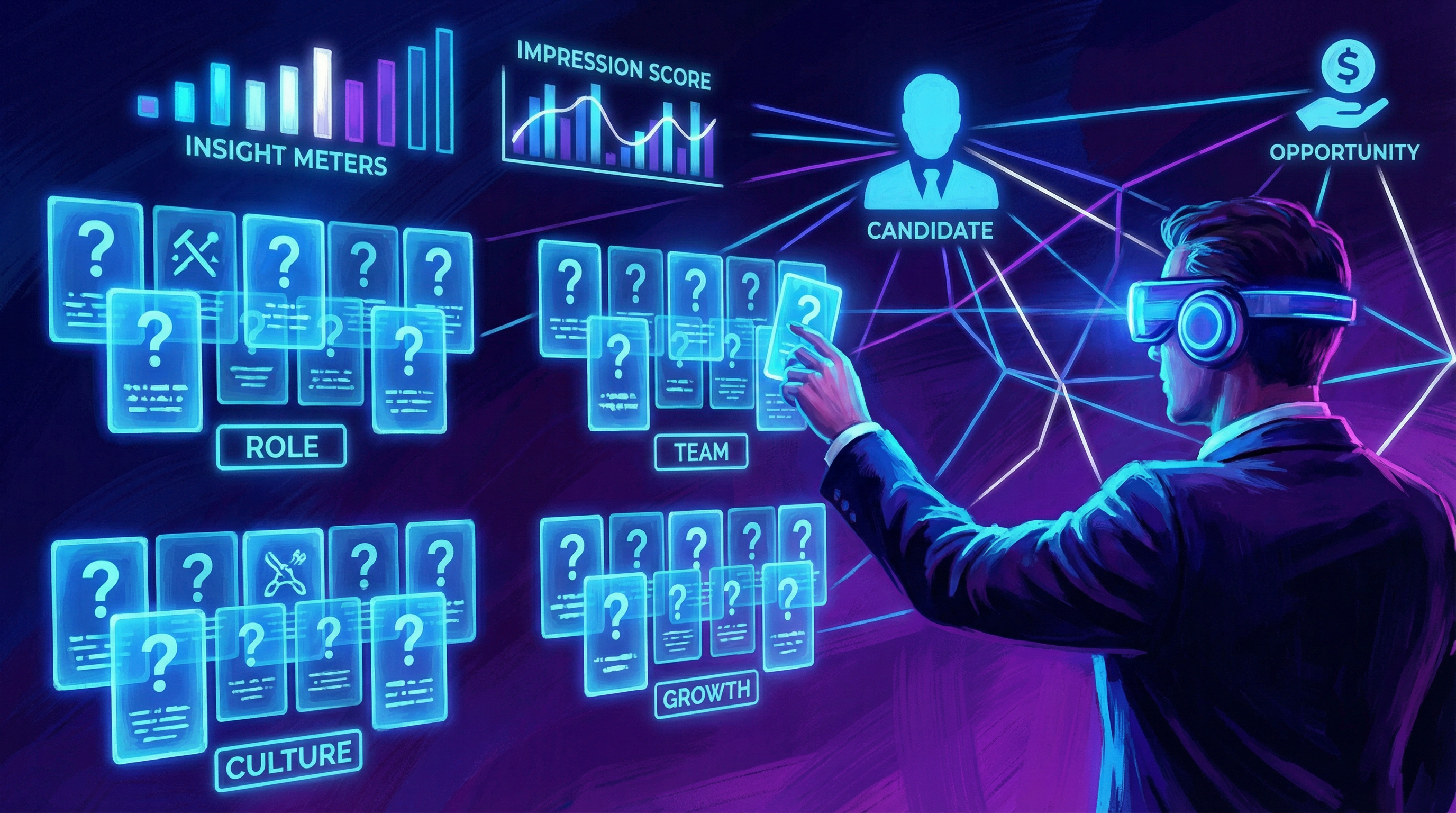
The Golden Rules
✅ DO:
- Ask 5-7 questions total (don't exhaust your list—save some for future rounds)
- Reference specific research about the company when possible
- Take notes on the answers (shows you value their insights)
- Ask different questions to different interviewers if you have multiple interviews
- Follow up with clarifying questions if their answers spark curiosity
❌ DON'T:
- Ask about salary, benefits, or vacation time in first interviews (save for offer negotiations)
- Request information that's easily found on the company website
- Ask yes/no questions (they don't generate dialogue)
- Interrupt or argue with their answers
- Ask nothing or say "No, you covered everything"
The Perfect Setup
When the interviewer asks, "Do you have any questions for me?" respond with enthusiasm:
"Absolutely! I've really enjoyed our conversation, and I'm even more excited about the opportunity. I have a few questions that would help me better understand the role and how I can make an immediate impact. First, I'd love to know..."
This framing positions you as engaged, confident, and ready to contribute.
🏆 Part 1: Questions About the Role & Day-to-Day (Questions 1-5)
These questions help you understand what success looks like and what your actual day-to-day experience would be.
1️⃣ "Can you walk me through what a typical day or week looks like in this role?"
🎯 Why It Works: This reveals the reality beyond the job description. Job descriptions list responsibilities, but this question uncovers what you'll actually be doing hour-by-hour. You'll learn about work rhythm, priorities, collaboration patterns, and whether the role matches your expectations and working style.
It's a safe, comfortable opening question that gets the conversation flowing while gathering crucial practical information.
🔍 What to Listen For:
- Variety vs. repetition: Diverse projects and challenges, or same tasks repeatedly?
- Autonomy vs. collaboration: Working independently with check-ins, or constant meetings and teamwork?
- Strategic vs. reactive: Proactive planning and execution, or constant firefighting and crisis management?
- Workload sustainability: Reasonable pace with focused work blocks, or back-to-back meetings with unrealistic deadlines?
- Meeting culture: How much time in meetings vs. deep work?
- Communication patterns: Synchronous (meetings, calls) vs. asynchronous (email, Slack, documentation)?
💡 Follow-Up Question: "How much of the role is strategic planning versus tactical execution? And how much time is typically spent in meetings versus independent work?"
2️⃣ "What's the biggest challenge your team is currently facing that someone in this role could help address?"
🎯 Why It Works: Instead of asking generic questions about daily tasks, you're directly addressing the pain point that motivated the hiring decision. This frames you as a problem-solver, not a task-completer. The question forces the interviewer to articulate the deeper business need, giving you crucial context about what success really means.
This also creates a natural opening for you to share relevant examples: "That's interesting—I actually dealt with a similar challenge when..."
🔍 What to Listen For:
- Are challenges external (market shifts, competition) or internal (process inefficiencies, skill gaps)?
- Do they mention resource constraints, legacy systems, or scaling issues?
- Is there clarity about the challenges, or vague uncertainty that might signal poor planning?
- Are you jumping into a stable situation or a chaotic firefighting scenario?
💡 Personalization Example: "Given the recent expansion into European markets you mentioned on the earnings call, what are the biggest localization challenges the team is facing?"
💡 Follow-Up Question: "What would an ideal solution look like from your perspective, and what's prevented you from implementing it so far?"
3️⃣ "Can you describe the most successful person who has held this position? What made them stand out?"
🎯 Why It Works: This is brilliant because you're asking for a concrete blueprint for success rather than abstract criteria. Their answer reveals what they truly value in practice—initiative, teamwork, technical excellence, innovation, customer focus, etc.—not what they claim to value in theory.
It also shows you're already thinking about excelling in the role, not just getting hired. This forward-thinking mindset impresses interviewers.
🔍 What to Listen For:
- Skills emphasized: Technical expertise, soft skills, business acumen, or a combination?
- Individual vs. collaborative success: Solo contributor brilliance or team player who elevates others?
- Specific examples: Do they give concrete behaviors ("She always came to meetings with data-driven recommendations") or vague generalities ("He was just really good")?
- Clarity of vision: Do they have a clear picture of excellence, or do they struggle to articulate what success looks like?
- Cultural values: What does their description reveal about what's actually rewarded here?
💡 Personalization Example: "You mentioned earlier that the team is focused on improving customer retention—was the most successful person particularly strong in that area?"
💡 Follow-Up Questions:
- "What happened to them? Did they get promoted internally, or did they move to another company?"
- "Are they still someone the team looks up to or references as an example?"
(If they were promoted: shows clear growth path. If they left: might signal limited advancement or cultural issues worth exploring.)
4️⃣ "How will my performance be measured, and what are the key metrics or KPIs for this role?"
🎯 Why It Works: This is a critical question that separates serious candidates from casual applicants. It shows you care about being held accountable and understand that valuable work should be measurable. It also prevents surprises down the line—you'll know exactly what success looks like in concrete terms, not vague aspirations.
Hiring managers respect candidates who ask this because it demonstrates professional maturity and a results-driven mindset.
🔍 What to Listen For:
- Specific metrics (revenue targets, customer satisfaction scores, project delivery timelines) or vague generalities ("we'll know it when we see it")?
- Regular feedback cadence (weekly 1:1s, monthly reviews) or annual reviews only?
- Is feedback two-way and developmental, or top-down and punitive?
- Are metrics realistic and achievable, or potentially set up for failure?
💡 Follow-Up Question: "What would success look like in the first 90 days, and how will that be measured?"
5️⃣ "What resources, tools, or support systems are available to help me succeed in this role?"
🎯 Why It Works: Shows you're thinking practically about execution. Also reveals whether they invest in employee success.
🔍 What to Listen For:
- Mention of training budgets, mentorship, or onboarding programs?
- Access to modern tools or outdated systems?
- Supportive infrastructure or sink-or-swim mentality?
💡 Follow-Up Question: "Is there a formal onboarding process, and how long does it typically last?"
👥 Part 2: Questions About Team & Leadership (Questions 6-10)
Understanding your future colleagues and manager is crucial for long-term satisfaction.
6️⃣ "Can you tell me about the team I'd be working with? What are their backgrounds and strengths?"
🎯 Why It Works: Demonstrates you value collaboration and want to understand team dynamics before joining.
🔍 What to Listen For:
- Diverse skill sets or homogeneous backgrounds?
- Do they speak enthusiastically about their team?
- Team stability or high turnover?
💡 Follow-Up Question: "How does the team typically collaborate—in person, hybrid, or fully remote?"
7️⃣ "What's your management style, and how do you support your direct reports?"
🎯 Why It Works: If interviewing with your potential manager, this is absolutely essential. Research consistently shows that your relationship with your direct manager is the #1 predictor of job satisfaction, outweighing salary, benefits, and even company culture. People don't leave companies—they leave managers.
This question gives you critical insight into your day-to-day work experience. A great manager can make a mediocre role enjoyable; a poor manager can make a dream role unbearable.
🔍 What to Listen For:
- Micromanager or empowering leader? Do they say "I like to know what everyone's working on at all times" or "I trust my team to own their work"?
- Communication frequency: Regular check-ins (healthy) or hands-off to the point of neglect?
- Development focus: Do they talk about helping people grow, or just about getting tasks done?
- Specific examples: Vague platitudes ("I'm supportive") or concrete behaviors ("I hold weekly 1:1s where we discuss both projects and career growth")?
- How they handle mistakes: Punitive or growth-oriented?
💡 Follow-Up Question: "Can you give me a specific example of how you've helped someone on your team grow professionally or overcome a challenge?"
8️⃣ "How does this team contribute to the company's overall mission and strategic goals?"
🎯 Why It Works: Shows you think big picture and want to understand your impact beyond daily tasks.
🔍 What to Listen For:
- Clear connection to company goals or disconnected silo?
- Do they speak with pride about the team's impact?
- Alignment with leadership's vision?
💡 Follow-Up Question: "What's the most impactful project this team has delivered recently?"
9️⃣ "What do you personally enjoy most about working here?"
🎯 Why It Works: This humanizes the conversation and often elicits genuine, unscripted responses about culture.
🔍 What to Listen For:
- Authentic enthusiasm or scripted corporate speak?
- Do they hesitate or answer immediately?
- Is it about people, mission, growth, or perks?
💡 Follow-Up Question: "What's been the biggest positive change you've seen since joining?"
🔟 "How does leadership respond to new ideas or initiatives from employees?"
🎯 Why It Works: This reveals whether the company genuinely encourages innovation, autonomy, and bottom-up thinking, or whether they just pay lip service to it while maintaining rigid top-down control.
Many companies claim to want "innovative self-starters," but punish employees who challenge the status quo. This question helps you distinguish authentic innovation cultures from hierarchical bureaucracies wearing innovation costumes.
🔍 What to Listen For:
- Concrete examples: Can they cite specific employee-driven initiatives that actually got implemented, or do they speak in vague generalities?
- Formal structures: Innovation labs, hackathons, dedicated innovation time (like Google's 20% time), suggestion programs?
- Informal encouragement: "Our CEO regularly takes coffee chats with junior employees to hear ideas" vs. "Ideas go through a 12-level approval process"
- Tolerance for failure: Do they celebrate smart risks that didn't work out, or punish failures?
- Speed of decision-making: How long from idea to implementation?
- Red flag: If they struggle to think of any examples or say "we're working on creating more channels for that"
💡 Follow-Up Question: "Can you walk me through a specific example of an employee idea that was implemented? What was the process like from proposal to execution?"
🌱 Part 3: Questions About Growth & Development (Questions 11-14)
Your career trajectory matters. These questions assess investment in employee growth.
1️⃣1️⃣ "What opportunities exist for professional development and learning?"
🎯 Why It Works: Signals you're ambitious and growth-oriented, not just looking for a paycheck.
🔍 What to Listen For:
- Tuition reimbursement, conference budgets, training programs?
- Encouragement to learn or lip service?
- Investment in employee development or cost-cutting?
💡 Follow-Up Question: "Do team members typically pursue certifications or continuing education?"
1️⃣2️⃣ "What does the typical career path look like for someone in this role?"
🎯 Why It Works: Shows you're thinking long-term and evaluating growth potential.
🔍 What to Listen For:
- Clear advancement paths or dead-end roles?
- Examples of internal promotions?
- Timeline for advancement (6 months, 3 years, 10 years)?
💡 Follow-Up Question: "How common is internal mobility across departments?"
1️⃣3️⃣ "How does the company support work-life balance and employee well-being?"
🎯 Why It Works: This is increasingly important to modern workers and reveals whether the company genuinely values employee well-being or just includes it in marketing materials. It also helps you assess whether the workload and expectations are sustainable long-term.
Pro Tip: Pay attention to how they answer as much as what they say. Hesitation, defensive posture, or immediately pivoting to "but we work hard here" can be red flags.
🔍 What to Listen For:
- Specific programs: Wellness stipends, mental health resources, flexible hours, unlimited PTO (and whether people actually use it), remote work options, parental leave policies
- Cultural norms: Do they mention expectations about after-hours emails, weekend work, or taking vacation without guilt?
- Walk the talk: Do they give examples of leaders modeling healthy boundaries, or do they describe a culture where everyone works 60-hour weeks?
- Recent initiatives: Have they recently improved policies based on employee feedback?
- Red flags: "We work hard and play hard," "You'll need to be comfortable with ambiguity and long hours," or vague non-answers
💡 Personalization Example: "I noticed on Glassdoor that work-life balance is mentioned frequently as both a strength and occasionally a challenge. What's your perspective on that?"
💡 Follow-Up Question: "What does 'flexible work arrangements' mean in practice for this team? For example, if I had a doctor's appointment at 2 PM on Tuesday, what would that process look like?"
1️⃣4️⃣ "What skills or knowledge would you recommend I develop to excel in this role and prepare for future opportunities?"
🎯 Why It Works: This is an absolute power move that demonstrates multiple attractive qualities simultaneously:
- Growth mindset: You're committed to continuous learning and improvement
- Proactivity: You're already thinking about how to prepare before day one
- Long-term thinking: You're not just focused on getting hired, but on excelling and advancing
- Openness to feedback: You're receptive to coaching and development
You're essentially asking them to be your mentor and provide a personalized development roadmap. Most interviewers love this question because it shows maturity and ambition.
🔍 What to Listen For:
- Specificity: Concrete skills ("Advanced SQL," "stakeholder management") or vague generalities ("be a team player")?
- Technical vs. soft skills: What's the balance? Does it match your strengths and interests?
- Realistic expectations: Achievable growth trajectory or unrealistic demands?
- Investment in development: Do they mention company-provided training, or expect you to figure it out alone?
- Alignment with your goals: Does their answer match where you want to develop?
💡 Follow-Up Questions:
- "Are there any books, courses, or resources that team members have found particularly valuable?"
- "Does the company provide learning budgets or time for professional development?"
- "Are there any internal experts I could learn from if I join the team?"
🏢 Part 4: Questions About Company Culture & Vision (Questions 15-18)
Culture fit is mutual. These questions help you evaluate whether you'll thrive here.
1️⃣5️⃣ "What's something people who thrive here do differently from those who struggle?"
🎯 Why It Works: This is a "sleeper question" that shifts focus from job responsibilities to cultural fit and unspoken expectations. Instead of asking generically about company values (which triggers rehearsed HR talking points), you're asking about observed patterns.
This forces the interviewer to reflect on what actually drives success versus failure in their environment. The answer reveals the real culture—the attitudes, work styles, and values that genuinely matter, not what's printed on motivational posters.
🔍 What to Listen For:
- Behavioral traits (proactive vs. reactive, collaborative vs. independent, data-driven vs. intuitive)
- Values alignment (customer-first, innovation, efficiency, quality)
- Communication styles (direct vs. diplomatic, formal vs. casual)
- Work ethic expectations (hustle culture vs. work-life balance)
- Red flags: answers like "those who work 80-hour weeks" or "those who never question leadership"
💡 Alternate Version: "Can you describe a colleague who exemplifies what it means to be successful at this company? What are their specific characteristics?"
💡 Follow-Up Question: "Can you give me a specific example of how someone demonstrated those traits recently?"
1️⃣6️⃣ "What would surprise me most about working here after my first month?"
🎯 Why It Works: This question acknowledges that reality often differs from perception. It invites honest, unscripted responses that reveal important cultural cues most interviewers won't volunteer unprompted.
The answer often reveals crucial details: whether employees regularly work weekends, whether the "flat hierarchy" is real or fiction, whether meetings are more numerous than advertised, or whether the pace is actually sustainable. It shows you're willing to hear candid feedback and think realistically about the role.
🔍 What to Listen For:
- Do they hesitate or answer immediately?
- Positive surprises (more autonomy, better resources, supportive culture) or concerning ones (more bureaucracy, slower pace, office politics)?
- Do they laugh nervously when answering?
- Is it about work style, culture, processes, or people?
💡 Follow-Up Question: "How did that surprise you when you first joined, and how have you adapted?"
1️⃣7️⃣ "What are the company's top priorities or strategic initiatives for the next year?"
🎯 Why It Works: This demonstrates strategic thinking and business acumen—you're not just asking about your tasks, but about how your work connects to larger organizational objectives. This is exactly the kind of big-picture thinking that separates individual contributors from future leaders.
It also gives you crucial context about where the company is heading: growth mode, transformation, survival, optimization, etc. This helps you assess both the opportunity and the risk.
🔍 What to Listen For:
- Clarity and confidence: Clear, specific goals ("expand into 3 new markets, launch 2 products, achieve profitability") or vague uncertainty ("continue to grow and improve")?
- Alignment across interviewers: Do different people describe consistent priorities, or does everyone seem to have different goals? (Misalignment is a red flag)
- Growth vs. defense: Exciting expansion initiatives, or defensive cost-cutting and survival mode?
- Enthusiasm vs. obligation: Do they speak with genuine excitement about the vision, or as if reciting corporate talking points?
- Your role's relevance: Can they clearly connect these priorities to your specific role, or is the connection unclear?
💡 Personalization Examples:
- "I saw in your recent press release that you're launching an AI-powered analytics platform. Is that one of the top strategic priorities, and how would this role support that initiative?"
- "In the Q3 earnings call, the CEO mentioned international expansion as a key focus. How does that shape priorities for this team?"
- "I noticed you recently acquired [Company X]. How does that acquisition factor into the strategic roadmap?"
💡 Follow-Up Question: "How specifically does this role contribute to those strategic initiatives? Where would I have the most immediate impact?"
1️⃣8️⃣ "How has the company evolved or changed in the past few years?"
🎯 Why It Works: Reveals the company's trajectory—growing, stagnating, or struggling. It also shows you care about context and history, not just the present moment. Companies in different life stages require different skill sets and offer different opportunities.
🔍 What to Listen For:
- Positive evolution (expansion, innovation, market leadership) or reactive changes (layoffs, pivots, restructuring)?
- Do they speak with pride about progress or resignation about challenges?
- Transparency about struggles and how they overcame them, or corporate spin that glosses over difficulties?
- Examples of adaptation and learning, or rigid resistance to change?
💡 Follow-Up Question: "What do you see as the biggest opportunity for growth or improvement in the next 2-3 years?"
1️⃣9️⃣ "How does the company handle feedback and continuous improvement?"
🎯 Why It Works: Indicates whether the organization is learning-oriented or stuck in its ways.
🔍 What to Listen For:
- Examples of employee surveys, town halls, or feedback loops?
- Recent changes based on employee input?
- Defensive posture or genuine openness?
💡 Follow-Up Question: "Can you share an instance where employee feedback led to a meaningful change?"
🎬 Part 5: Questions About Next Steps & Closing Strong (Questions 20-21)
End with confidence and clarity about the process ahead.
2️⃣0️⃣ "Based on our conversation today, do you have any concerns about my qualifications or fit for this role?"
🎯 Why It Works: This is a bold, confidence move that separates exceptional candidates from good ones. It demonstrates:
- Self-awareness: You understand that every candidate has potential gaps
- Emotional intelligence: You're comfortable with constructive feedback
- Proactivity: You'd rather address concerns now than wonder about them later
- Sales acumen: You're giving yourself a chance to overcome objections in real-time
Most candidates avoid this question because they're afraid of negative feedback. But hiring managers respect candidates who ask it because it shows professional maturity and genuine confidence (not arrogance).
🔍 What to Listen For:
- Honest, constructive concerns you can address immediately (e.g., "You don't have direct experience with Python")
- Reassurance about your fit (e.g., "Actually, no concerns—you'd be a great fit")
- Vague hesitation that might indicate red flags or unstated reservations
- How they deliver feedback: Respectful and constructive, or harsh and dismissive?
💡 Handling Their Response:
If they raise a legitimate concern: "I appreciate your candor. Let me speak to that directly..."
[Then address it with a specific example or plan]
Example: "You mentioned my lack of direct Python experience. While most of my recent work has been in JavaScript, I actually built several automation scripts in Python at my previous role, and I'm confident I can ramp up quickly. In fact, I've already started taking an advanced Python course to prepare for this transition. Would you like me to walk through one of those projects?"
If they say no concerns: "That's great to hear. I'm very confident I can make an immediate impact in this role."
If they hesitate: Stay calm and give them space: "I understand this is a big decision. If anything comes to mind later, I'm happy to address it in a follow-up conversation."
2️⃣1️⃣ "What are the next steps in the interview process, and when can I expect to hear back?"
🎯 Why It Works: Shows you're organized and proactive. Also sets clear expectations for follow-up.
🔍 What to Listen For:
- Clear timeline or vague "we'll be in touch"?
- Additional interview rounds or decision imminent?
- Who will contact you and how?
💡 Follow-Up: "Is there anything else I can provide to help with your decision-making process?"
🎓 Strategic Framework: How to Deploy These Questions
Before the Interview: Preparation Is Everything
1. Select 6-8 Questions That Feel Authentic Don't try to memorize all 21. Choose questions that genuinely interest you and align with your priorities. Forcing questions that don't resonate will sound scripted and insincere.
2. Customize At Least 2-3 Questions With Specific Research Generic questions from lists are forgettable. Personalized questions are memorable. The difference is often just one sentence of context:
- Generic: "What does success look like in this role?"
- Personalized: "Given that you mentioned the team just tripled in size, what does success look like in managing that growth over the next 6 months?"
3. Write Them Down and Bring Notes Bringing a notepad with prepared questions shows preparedness, not weakness. Professionals take notes and come prepared. Don't apologize for referencing your list.
During the Interview: Read the Room
✅ Listen Actively The interviewer may answer some of your planned questions during the natural conversation. Cross them off mentally and don't repeat them.
✅ Let Questions Emerge Organically Don't save all questions for the end. If there's a natural opening mid-interview ("That's interesting—can I ask how that process works?"), take it. This creates dialogue, not interrogation.
✅ Follow the "Rule of 5-7" Ask 5-7 substantive questions total across the interview. More than that can feel like you're interrogating them; fewer signals lack of interest.
✅ Adapt Based on Time If you're running short on time, prioritize your top 3 questions. If the conversation is flowing, you can ask more.
The Sequencing Strategy That Works
1. Start with a Role/Team Question (Lower Stakes, Builds Rapport) Begin with questions about the role, team, or day-to-day work. These are comfortable and get the conversation flowing.
Example: "Can you walk me through what a typical week looks like in this role?"
2. Move to Strategic/Cultural Questions (Shows Big-Picture Thinking) Transition to questions about company strategy, culture, and values. This elevates the conversation.
Example: "What's something people who thrive here do differently from those who struggle?"
3. Add a Growth/Development Question (Demonstrates Ambition) Show you're thinking long-term about your career trajectory.
Example: "What opportunities exist for professional development and learning?"
4. Close with Performance/Next Steps (Leaves Strong Impression) End by addressing concerns directly and clarifying the process.
Example: "Based on our conversation, do you have any concerns about my qualifications?"
Match Questions to Your Audience
Different interviewers have different perspectives and priorities. Tailor your questions accordingly:
🎯 HR/Recruiter:
- Focus on: Company culture, onboarding process, hiring timeline, team composition
- Ask: "What do candidates commonly underestimate about this role?"
- Ask: "How would you describe someone who's been successful in this position?"
👔 Hiring Manager (Your Future Boss):
- Focus on: Team dynamics, role expectations, success metrics, management style
- Ask: "What keeps you up at night regarding this team's goals?"
- Ask: "What's your management style, and how do you support your direct reports?"
👥 Potential Peers:
- Focus on: Day-to-day reality, collaboration style, work environment, honest culture insights
- Ask: "What do you wish you'd known before starting here?"
- Ask: "What would surprise me most about working here after my first month?"
👤 Senior Leadership:
- Focus on: Company vision, strategic priorities, industry positioning, competitive landscape
- Ask: "How do you see this department evolving over the next 3-5 years?"
- Ask: "What major industry trends or changes is the company preparing for?"
The Personalization Principle: Make Every Question Count
The most memorable candidates personalize their questions with specific research or interview callbacks. Here's how:
❌ Generic (Forgettable): "What are the company's priorities for next year?"
✅ Personalized (Memorable): "I saw in your Q3 earnings report that you're expanding into the Asian market. Is that a key strategic priority for the next year, and how would this role support that expansion?"
❌ Generic (Forgettable): "What's the company culture like?"
✅ Personalized (Memorable): "You mentioned earlier that the team just went through a major reorganization. How has that impacted the culture, and what are you doing to maintain cohesion during the transition?"
(If you want to start impressing recruiters even before the interview, check out these cover letter opening lines that hook recruiters.)
Pro Tip: Reference something specific from:
- Your research (recent news, earnings reports, product launches)
- The job description
- The interviewer's LinkedIn profile or career path
- Something they said earlier in the interview
Industry-Specific Variations
💻 Tech/Startups:
- "What's your tech stack, and how does the team approach technical debt?"
- "How do you balance moving fast with maintaining quality?"
🏥 Healthcare/Nonprofit:
- "How do you measure impact beyond financial metrics?"
- "What's the most rewarding aspect of the mission for your team?"
📈 Sales/Business Development:
- "What tools and resources does the team use to hit targets?"
- "How is success balanced between individual and team performance?"
🎨 Creative/Marketing:
- "How much creative freedom does the team have?"
- "Can you walk me through the typical project approval process?"
🚫 Questions to Avoid (Red Flags for Interviewers)
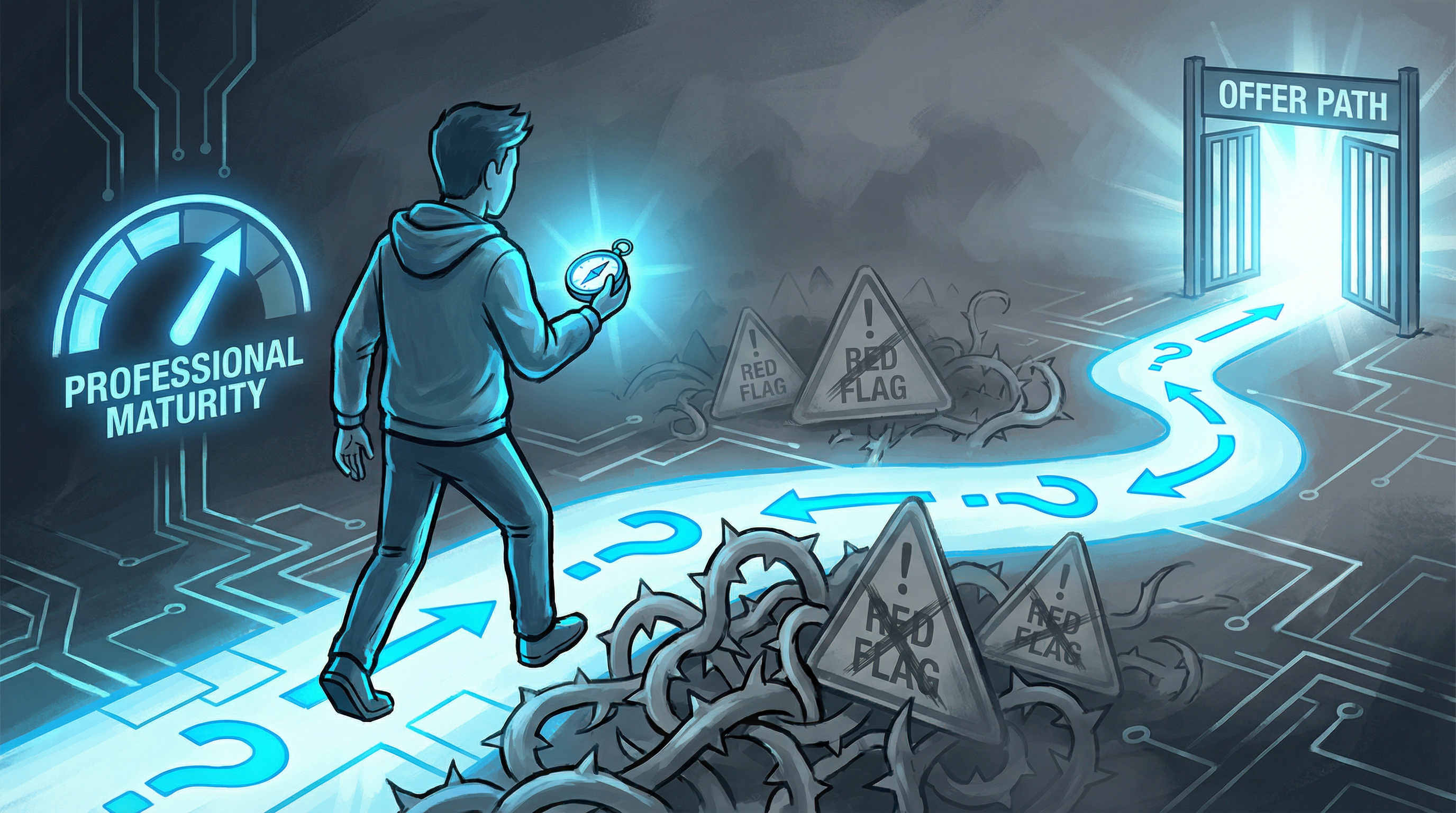
While thoughtful questions demonstrate engagement, certain questions can seriously damage your candidacy. Avoid these common mistakes:
Questions That Show You Didn't Research
❌ "What does your company do?" This should be answered by visiting the company website. It signals laziness and lack of genuine interest.
❌ "How many employees do you have?" or "Where are your offices located?" Easily Googled information wastes everyone's time and suggests poor preparation.
Better Alternative: Ask questions that build on your research, like "I saw you recently opened an office in Austin—how does that expansion support your growth strategy?"
Questions That Seem Entitled or Self-Interested Too Early
❌ "How soon can I get promoted?" You haven't proven your value yet. This makes you seem entitled and focused on advancement before contribution.
❌ "What's the salary range?" or "When do I get a raise?" Save compensation discussions for after you have an offer, not during first-round interviews.
❌ "How much vacation time do I get?" or "What are the holidays?" While benefits matter, asking about them too early signals you're more interested in time off than contributing.
❌ "How soon can I work remotely full-time?" Even in remote-friendly companies, asking this immediately suggests you want flexibility before building trust.
Better Timing: Ask about benefits, compensation, and flexibility after you receive an offer or in final-round interviews when mutual interest is established.
Questions That Signal Low Commitment or Poor Work Ethic
❌ "Will I have to work late or on weekends?" While work-life balance matters, framing it negatively makes you sound unwilling to go the extra mile when needed.
❌ "How strict is the 9-to-5 schedule?" Similar to above—it sounds like you're looking for minimal effort.
❌ "Can I leave early on Fridays?" You're already negotiating time off before you've started.
Better Alternative: Ask about work-life balance and flexibility in a positive, mature way: "How does the company support work-life balance and employee well-being?"
Questions That Reveal You Weren't Listening
❌ Asking about something they literally just explained This is embarrassing and shows you weren't paying attention. Take notes to avoid this.
❌ "What did you say your name was again?" Learn and remember names. Write them down if you meet multiple people.
Better Practice: Reference what they said earlier to show active listening: "You mentioned earlier that the team is working on X—can you tell me more about that?"
Combative, Negative, or Inappropriate Questions
❌ "Why is your company so far behind your competitors?" Even if true, this is aggressive and judgmental. You're not there to criticize—you're there to contribute.
❌ "I saw some negative Glassdoor reviews about management. What's going on?" While you can ask about concerns diplomatically, leading with negativity creates adversarial tone.
❌ "How do you deal with your high turnover rate?" Accusatory and puts them on the defensive.
❌ "Are you planning to fire anyone on the team?" Inappropriate and creates awkwardness.
Better Approach: If you have legitimate concerns, frame them neutrally: "I noticed on Glassdoor that work-life balance receives mixed reviews. What's your perspective on that?"
Questions That Are Too Numerous
❌ Asking 10-15 questions in rapid-fire succession You're interviewing them, but this isn't an interrogation. Respect their time.
Better Practice: Ask 5-7 thoughtful questions with genuine curiosity and engagement. Quality over quantity.
The Ultimate Question to Avoid
❌ "No, I don't have any questions." This is arguably the worst response. It signals:
- Lack of interest in the role
- Poor preparation
- Inability to think critically
- You view the interview as a formality, not a two-way evaluation
Even if all your questions were answered, you can say: "You've actually addressed most of my questions throughout our conversation, which has been really helpful. I do have one final question: [ask question 20 or 21]"
🏆 Key Takeaways: Your Interview Questions Checklist
Before the Interview
✅ Research thoroughly: Company news, recent projects, interviewer backgrounds, industry trends
✅ Select 6-8 authentic questions that genuinely interest you—don't memorize all 21
✅ Personalize 2-3 questions with specific research or company insights
✅ Write questions down and bring notes (shows professionalism, not weakness)
✅ Plan your sequence: Role questions → Team/culture → Growth → Strategic → Next steps
During the Interview
✅ Listen actively: Cross off questions answered naturally during conversation
✅ Ask questions organically: Don't save everything for the end if opportunities arise mid-interview
✅ Take visible notes: Shows you value their insights and helps with decision-making
✅ Ask 5-7 substantive questions total: Quality over quantity
✅ Match questions to your audience: HR ≠ Hiring Manager ≠ Peers ≠ Executives
✅ Ask follow-up questions: Show genuine engagement and curiosity
✅ Reference specifics: Callback to earlier conversation points or your research
What to Ask About
✅ Focus on substance first: Role challenges, team dynamics, success metrics, company vision
✅ Explore culture authentically: What makes people thrive vs. struggle here?
✅ Understand growth paths: Professional development, career trajectory, learning opportunities
✅ Assess strategic direction: Company priorities, competitive position, industry trends
✅ Close with confidence: Address concerns directly, clarify next steps
What to Avoid
❌ Never say "no questions"—signals disinterest or poor preparation
❌ Don't ask easily Googled info—shows laziness and lack of research
❌ Avoid benefits questions early—save salary, vacation, perks for offer stage
❌ Don't be combative or negative—frame concerns diplomatically
❌ Don't repeat what was just explained—take notes and listen actively
After the Interview
✅ Review your notes immediately: Evaluate answers while fresh
✅ Send personalized thank-you: Reference specific questions/insights from conversation
✅ Assess cultural fit: Do their answers align with your values and goals?
✅ Prepare follow-up questions: For subsequent interview rounds based on what you learned
✅ Trust your instincts: Red flags in answers deserve serious consideration
The Ultimate Test
Ask yourself: Did my questions demonstrate that I'm already thinking like a valuable team member, or just like someone trying to get hired?
The difference is everything.
🚀 Final Thoughts: The Interview Is a Two-Way Street
Remember: An interview is not just about them evaluating you. It's about you evaluating them.
The questions you ask aren't merely about impressing the interviewer—they're about gathering critical intelligence to make one of the most consequential decisions of your career. Where you work shapes:
- What skills you develop (and which atrophy)
- Who you spend 40+ hours per week with (more than family in many cases)
- What mission you serve (purpose drives fulfillment)
- What trajectory your career takes (momentum compounds)
- Your mental health and life satisfaction (burnout is real)
The best candidates understand that landing the job is just the beginning. The real goal is finding an environment where you'll thrive, grow, and make meaningful impact for years to come—not just survive until the next job search.
According to Gallup's 2025 Workplace Report, employees who ask strategic questions during interviews are 2.3x more likely to report high job satisfaction one year later. Why? Because they made informed decisions aligned with their values, strengths, and goals—not desperate decisions based on incomplete information.
The Confidence You're Projecting
When you ask thoughtful, well-researched questions, you signal something powerful:
"I'm not desperate for any job. I'm evaluating whether this specific opportunity aligns with my career trajectory, values, and the impact I want to make. I take this decision seriously because I plan to invest significant time, energy, and expertise here. I'm interviewing you just as much as you're interviewing me."
This is exactly the mindset top companies want in their employees—ownership, critical thinking, and high standards.
So walk into that interview with confidence. You're not just a supplicant hoping for approval—you're a professional conducting due diligence on your future. Ask boldly, listen carefully, take notes, and trust your instincts.
The candidates who get hired and thrive aren't always the ones with the most experience. They're the ones who ask the best questions, demonstrate genuine strategic thinking, and make it clear they're making an informed choice about where to invest the next chapter of their careers.
That clarity, confidence, and intentionality? That's exactly what hiring managers want to see.
Frequently Asked Questions
Quick answers to common questions
1
How many questions should I ask at the end of an interview?
Ask 5-7 substantive questions total across the interview. This shows genuine interest without overwhelming the interviewer. More than 7 can feel like an interrogation, while fewer than 5 may signal lack of preparation or engagement. Quality matters more than quantity—focus on thoughtful, well-researched questions that demonstrate strategic thinking.
2
Is it okay to ask about salary and benefits during the first interview?
No, avoid asking about salary, benefits, or vacation time in first-round interviews. Save these discussions for after you receive an offer or during final-round interviews when mutual interest is established. Asking too early can signal that you're more focused on compensation than on contributing value. Instead, focus first-round questions on the role, team dynamics, company culture, and growth opportunities.
3
What if the interviewer already answered all my prepared questions during the conversation?
Never say "No, I don't have any questions." Instead, acknowledge this positively and ask a closing question:
"You've actually addressed most of my questions throughout our conversation, which has been really helpful. I do have one final question: Based on our conversation today, do you have any concerns about my qualifications or fit for this role?"
This shows you were listening actively while still demonstrating engagement and confidence.
4
Should I write down my questions and bring them to the interview?
Yes, absolutely! Bringing a notepad with prepared questions shows professionalism and preparation, not weakness. It demonstrates you take the opportunity seriously and have done your homework. Take visible notes during their answers—this shows you value their insights and are gathering information for decision-making. Just don't read questions robotically; use your notes as a guide while maintaining natural conversation flow.
5
What should I avoid asking about in an interview?
Avoid these red-flag questions:
❌ Easily Googled information: "What does your company do?" or "How many employees do you have?"
❌ Premature benefits questions: "How much vacation time do I get?" or "When do I get a raise?"
❌ Entitled-sounding questions: "How soon can I get promoted?"
❌ Low commitment signals: "Will I have to work late or weekends?" or "How strict is the 9-to-5 schedule?"
❌ Combative or negative framing: "Why is your company so far behind competitors?"
❌ Questions about info just explained: Shows you weren't listening
Frame questions positively and demonstrate genuine curiosity rather than skepticism or entitlement.
6
How do I ask about work-life balance without sounding lazy or uncommitted?
Frame it positively and maturely:
✅ Good: "How does the company support work-life balance and employee well-being?"
✅ Good: "What does 'flexible work arrangements' mean in practice for this team?"
✅ Good: "I noticed on Glassdoor that work-life balance receives mixed reviews. What's your perspective on that?"
❌ Bad: "Will I have to work late or weekends?"
❌ Bad: "How strict is the 9-to-5 schedule?"
The difference is framing it as genuine curiosity about company culture and sustainability rather than trying to minimize effort. Listen for specific programs (wellness benefits, flexible hours, PTO policies) and whether leadership models healthy boundaries.
Was this article helpful?
Table of Contents
💡 The Psychology Behind Interview Questions
🎪 How to Ask Questions Like a Pro
🏆 Part 1: Questions About the Role & Day-to-Day (Questions 1-5)
👥 Part 2: Questions About Team & Leadership (Questions 6-10)
🌱 Part 3: Questions About Growth & Development (Questions 11-14)
🏢 Part 4: Questions About Company Culture & Vision (Questions 15-18)
🎬 Part 5: Questions About Next Steps & Closing Strong (Questions 20-21)
🎓 Strategic Framework: How to Deploy These Questions
🚫 Questions to Avoid (Red Flags for Interviewers)
🏆 Key Takeaways: Your Interview Questions Checklist
🚀 Final Thoughts: The Interview Is a Two-Way Street
1How many questions should I ask at the end of an interview?
2Is it okay to ask about salary and benefits during the first interview?
3What if the interviewer already answered all my prepared questions during the conversation?
4Should I write down my questions and bring them to the interview?
5What should I avoid asking about in an interview?
6How do I ask about work-life balance without sounding lazy or uncommitted?
Share this article
Other articles
Top 30 Common Job Interview Questions and Best Answers
Master your next interview with this comprehensive guide to the most common questions and how to answer them effectively.
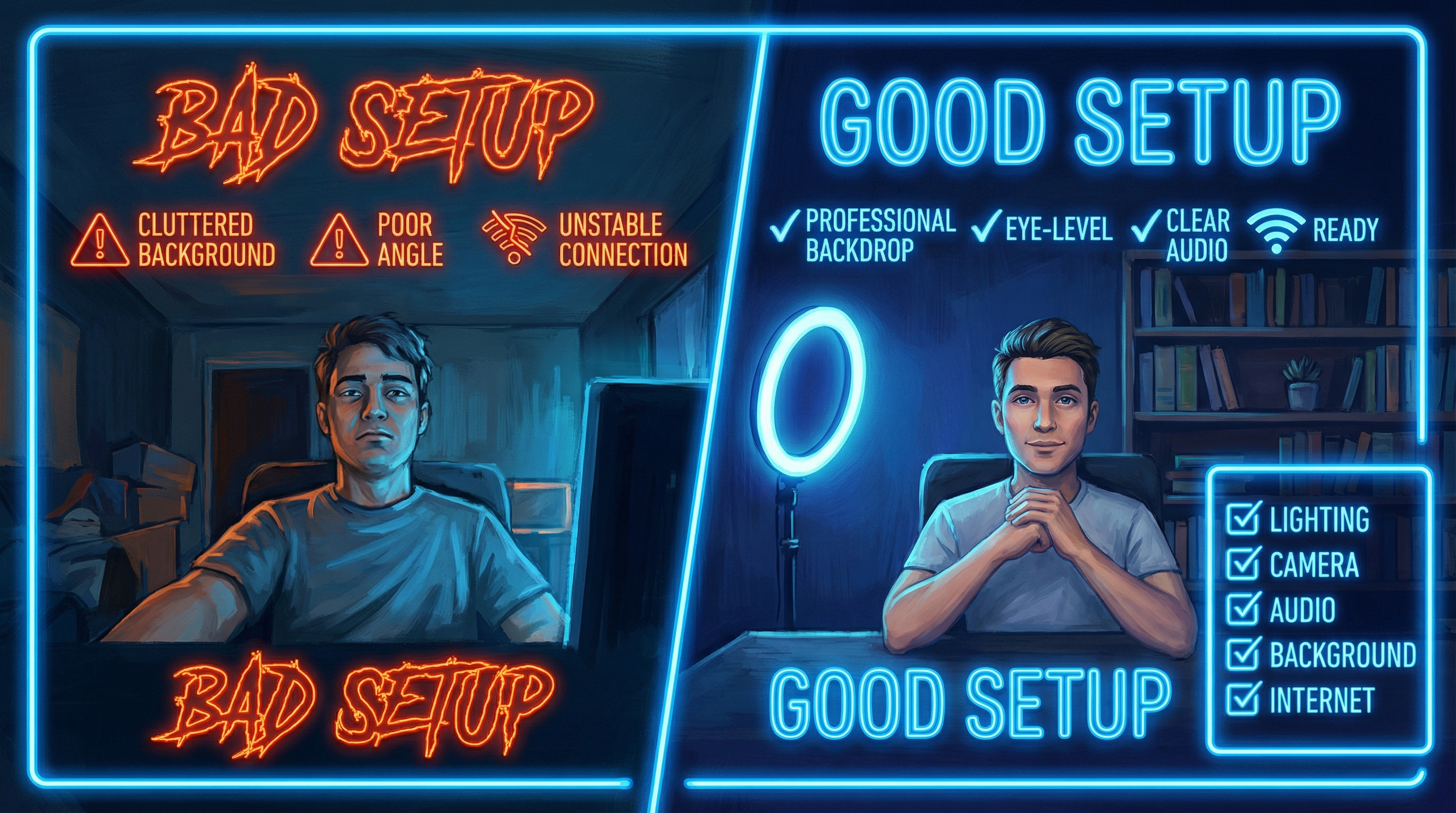
How to Ace a Zoom Interview: Setup, Lighting, and Etiquette
Master the art of virtual interviews with expert tips on technical setup, lighting, background, and professional etiquette.
40 LinkedIn Tips and Tricks You Should Use in 2026
Master LinkedIn's algorithm, optimize your profile, and accelerate your career with these proven strategies