10 High-Paying Remote Jobs Without a Degree in 2026
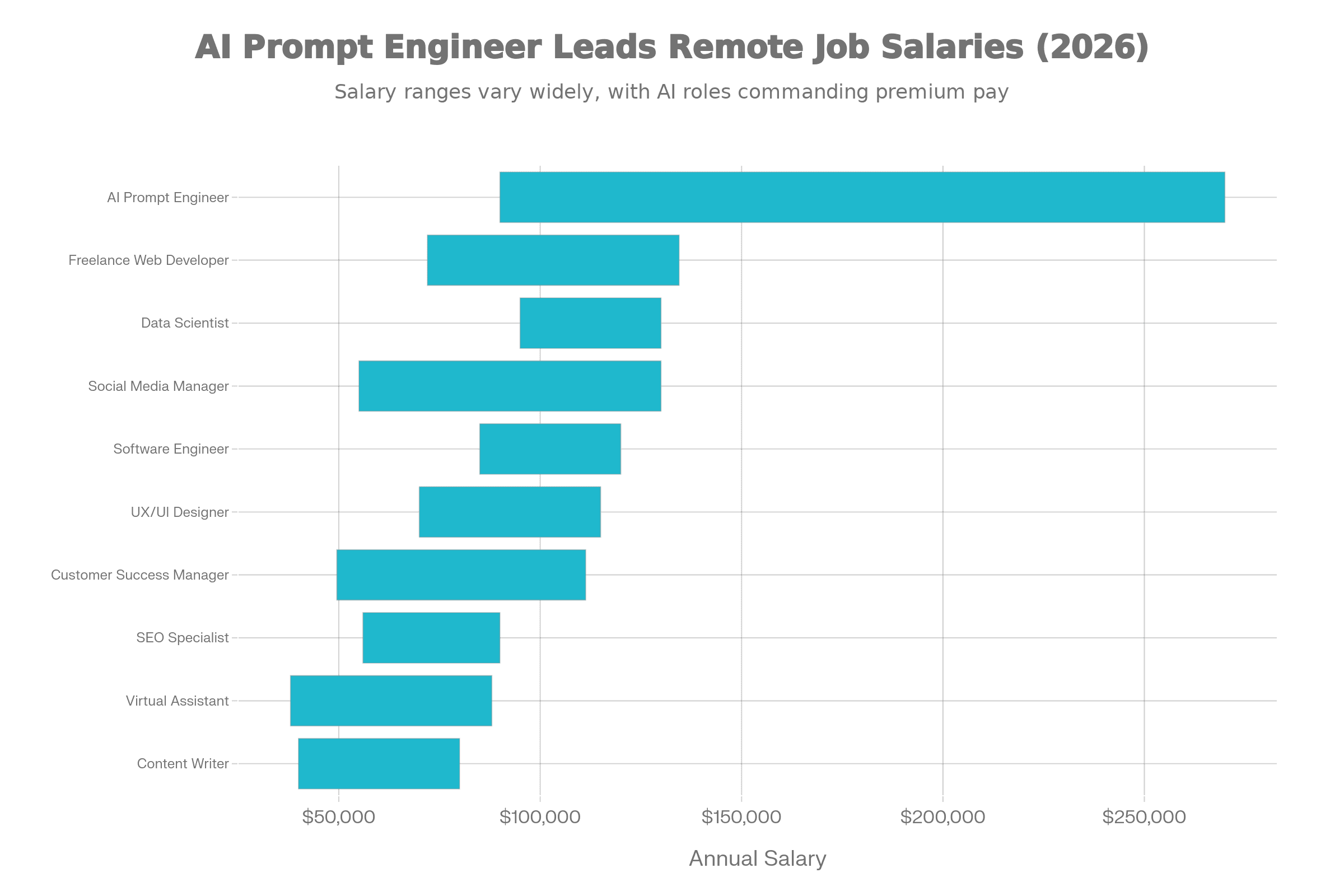
Discover lucrative remote careers earning $90K-$270K+ annually without formal credentials—backed by real salary data and proven entry pathways.
8 months ago

The remote work revolution has fundamentally transformed career possibilities. Unlike traditional employment paths that demanded formal credentials, today's most lucrative remote positions reward skill, portfolio strength, and demonstrated expertise. Whether you're seeking a career change, scaling your income, or embracing location independence, these ten roles offer substantial earning potential without requiring a college degree.
The Remote Work Salary Landscape in 2026
The demand for remote talent has never been stronger. Companies worldwide now compete aggressively for skilled professionals unconstrained by geography, pushing salaries upward across multiple sectors. AI adoption, digital transformation, and the normalization of distributed teams have created unprecedented opportunities for high-earning remote work.
Notably, several remote positions now command salaries that rival or exceed traditional office-based roles—sometimes by 10-20% premiums. This shift rewards competency and results over credentials, making credential-free pathways more viable than ever. (Once you've identified your target role, be sure to verify which platforms list legitimate opportunities by reviewing our guide to the 21 best remote jobs websites.)

1. AI Prompt Engineer
Annual Salary Range: $90,000 - $270,000+
AI Prompt Engineering has emerged as one of the fastest-growing and highest-paying remote careers. Prompt engineers optimize interactions between humans and large language models (LLMs), designing precise instructions that unlock optimal AI performance across applications from content creation to software development.
Salary Breakdown by Experience:
- Entry-level: $90,000–$120,000
- Mid-level (2-4 years): $130,000–$160,000
- Senior: $180,000–$250,000+
The field has generated headlines with outlier positions—notably Anthropic posted a "Prompt Engineer and Librarian" role offering up to $335,000—though such positions remain exceptional. More typical senior roles at AI-focused companies reach the mid-$200,000 range in total compensation, often including significant bonuses and equity.
Why No Degree Required: Success demands understanding how AI models work, strong communication skills, and the ability to test and iterate on prompts. Many prompt engineers come from technical backgrounds (programming, content writing) or are self-taught through AI platforms and experimentation. Companies prioritize demonstrated prompt-crafting ability over formal qualifications.
(If you're applying without a degree, your resume needs to focus heavily on skills and projects. Learn how to write a resume with no experience to frame your self-taught expertise effectively.)
Getting Started: Begin with free platforms like ChatGPT, Claude, or Gemini. Experiment with prompt design, document your results, and build a portfolio. Consider AI-focused certifications or short courses (Google offers AI certifications) to accelerate learning. Freelance platforms like Upwork now list hundreds of prompt engineering gigs.
2. Data Scientist
Annual Salary Range: $95,000 - $130,000+
Data scientists rank among the highest-earning remote professionals. They collect, analyze, and interpret complex datasets to inform business decisions, combining statistical expertise with storytelling to translate data insights into actionable strategies.
Salary Breakdown by Experience:
- Entry-level: $68,000–$95,000
- Mid-level: $100,000–$120,000
- Senior/Leadership: $130,000+
For digital nomads specifically, data science yields the highest average annual earnings at approximately $132,000, according to recent remote work data.
Why No Degree Required: While many data scientists hold advanced degrees (PhDs in mathematics or statistics), an increasing number break into the field through alternative pathways. Strong programming skills (Python, R, SQL), statistical knowledge, and portfolio projects demonstrating real-world analysis often matter more than credentials. Many successful data scientists are self-taught or completed bootcamps focused on data science.
Getting Started: Master Python and SQL through free resources (Codecademy, freeCodeCamp). Learn statistics fundamentals via Coursera or Khan Academy. Build portfolio projects analyzing real datasets (Kaggle competitions are excellent). Start freelancing or contract work to prove capability, then transition to full-time remote roles.
3. Software Engineer / Developer
Annual Salary Range: $85,000 - $120,000+
Software engineers remain perpetually in demand globally. They design, code, test, and maintain applications and software systems. Remote software roles span front-end development (user interfaces), back-end development (server-side logic), full-stack development, and specialized domains like blockchain or machine learning engineering.
Salary Breakdown by Experience:
- Entry-level: $77,000–$85,000
- Mid-level (3-6 years): $95,000–$115,000
- Senior: $120,000–$150,000+
Why No Degree Required: The software industry is famously credentials-agnostic. Self-taught developers, bootcamp graduates, and experienced developers from non-CS backgrounds successfully land six-figure remote positions. Companies evaluate software engineers primarily on technical skills (coding proficiency, problem-solving), portfolio work, and algorithmic thinking—not educational pedigree.
Getting Started: Learn programming fundamentals through platforms like The Odin Project, freeCodeCamp, or Codecademy. Choose a specialty (web development, mobile, backend). Build projects showcasing your work—GitHub repositories serve as your portfolio. Complete a coding bootcamp (App Academy, General Assembly) or pursue self-study. Land first roles through contract work, then scale to full-time remote positions.
4. UX/UI Designer
Annual Salary Range: $70,000 - $180,000+
User Experience (UX) and User Interface (UI) designers create intuitive, visually compelling digital products. They conduct user research, design interfaces, prototype solutions, and iterate based on feedback. As products become increasingly central to business success, UX/UI demand has soared.
Salary Breakdown by Experience:
- Junior (1-2 years): $65,000–$85,000
- Mid-level (2-4 years): $109,000–$115,000
- Senior (5-7 years): $180,000+
Remote junior UX designers average $83,725, often with higher competition but greater flexibility than office-based roles.
Why No Degree Required: UX/UI is explicitly portfolio-driven. Employers want to see your design work, user research methodology, problem-solving process, and design thinking—not credentials. Many successful UX designers are self-taught or transitioned from related fields (graphic design, web development, psychology).
Getting Started: Learn design fundamentals through platforms like Nielsen Norman Group's free articles, Interaction Design Foundation, or Coursera. Master design tools: Figma (industry standard), Sketch, Adobe XD, or Webflow. Enroll in a UX bootcamp (CareerFoundry, General Assembly, Springboard) or self-study using online courses. Build a portfolio with 3-6 excellent projects showcasing your research, ideation, prototyping, and iteration process. Include case studies explaining your methodology and the impact of your designs.
5. SEO Specialist
Annual Salary Range: $56,000 - $90,000+
SEO (Search Engine Optimization) specialists improve websites' visibility in search engines, driving organic traffic and revenue. They conduct keyword research, optimize content, manage technical SEO, build backlinks, and track performance metrics using tools like Google Analytics and SEMrush.
Salary Breakdown by Experience:
- Entry-level: $56,000–$70,000
- Mid-level: $70,000–$85,000
- Senior/Manager: $110,000–$175,000
Remote SEO specialists earn an average of $81,644, notably higher than many on-site positions. New York City offers some of the highest averages at $75,077.
Why No Degree Required: SEO success is entirely results-driven. What matters is your ability to improve search rankings, increase organic traffic, and demonstrate ROI. Certifications like Google Analytics and Search Console certification enhance credibility, and most SEO knowledge comes from industry blogs, webinars, and hands-on experience—not formal education.
Getting Started: Learn SEO fundamentals through platforms like Moz Academy (free), Semrush Academy, Google Search Central, or Coursera courses. Master tools: Google Search Console, Google Analytics, SEMrush, or Ahrefs. Build test websites or optimize existing ones to demonstrate results. Start freelancing on Upwork or Fiverr, then transition to agency or in-house remote roles with portfolio proof of traffic/ranking improvements.
6. Content Writer / Copywriter
Annual Salary Range: $40,000 - $103,000+
Content writers create engaging written material for websites, blogs, marketing campaigns, emails, social media, and digital platforms. Copywriters specialize in persuasive writing designed to convert readers into customers. Demand spans industries, from SaaS and tech to e-commerce, healthcare, and finance.
Salary Breakdown by Experience:
- Entry-level/Freelance: $38,000–$40,000
- Established freelancers: $60,000–$80,000
- Senior in-house roles: $80,000–$103,000+
Why No Degree Required: Writing ability, portfolio quality, and demonstrated results speak louder than credentials. Journalists, self-taught writers, and career-changers with strong writing skills successfully build lucrative writing careers. Test-drive your skills with freelance platforms before committing to full-time roles.
Getting Started: Develop strong writing fundamentals through platforms like Grammarly (educational resources), courses on Udemy or Coursera, or by studying copywriting legends (David Ogilvy, Eugene Schwartz). Create writing samples—start a blog, contribute to Medium, or write for free on platforms that build portfolio credit. Begin freelancing on Upwork, Fiverr, or Contently, charging based on project complexity. Build a writing portfolio website showcasing your best work. Transition to full-time remote content roles with demonstrated client results.
7. Customer Success Manager
Annual Salary Range: $49,500 - $111,300
Customer Success Managers ensure clients derive maximum value from a product or service, managing relationships from onboarding through renewal. They handle customer concerns, drive adoption, coordinate with sales and product teams, and retain high-value accounts.
Salary Breakdown by Experience:
- Entry-level: $35,000–$55,000
- Mid-level (2-4 years): $60,000–$85,000
- Senior: $90,000–$130,000+
In Italy specifically, remote customer success managers average €56,460–€59,104 annually, with entry-level roles starting around €35,000–€40,000.
Why No Degree Required: Customer success prioritizes soft skills—communication, problem-solving, empathy, and relationship management—over credentials. Many successful CSMs transition from customer service, sales, or support roles. Companies provide extensive training on their products; what they seek is the ability to build trust and drive client outcomes.
Getting Started: Develop customer-facing skills through customer service or support roles. Learn SaaS products deeply—become familiar with platforms like HubSpot, Salesforce, or Intercom. Develop presentation and communication skills. Move into customer success from support or sales roles at growing companies. Emphasize your ability to reduce churn, increase expansion revenue, and manage strategic accounts.
8. Social Media Manager
Annual Salary Range: $55,000 - $130,000+
Social Media Managers create content, manage brand communities, run paid campaigns, and track performance across platforms. They develop strategy, engage audiences, and drive measurable business outcomes through social channels.
Salary Breakdown by Experience:
- Entry-level: $40,000–$55,000
- Mid-level (3-5 years): $60,000–$85,000
- Senior: $90,000–$130,000
- Freelance hourly: $50–$150/hour
The average social media manager in the U.S. earns $60,259, with significant variation by experience, location, and industry.
Why No Degree Required: Social media success is demonstrable through follower growth, engagement rates, conversion metrics, and campaign ROI. What matters is platform expertise, creativity, analytics understanding, and community management ability. Self-taught social media professionals with strong portfolios secure premium roles.
Getting Started: Master individual platforms (Instagram, TikTok, LinkedIn, Twitter/X) by actively creating and understanding algorithm dynamics. Learn analytics tools: Meta Business Suite, TweetDeck, LinkedIn Analytics, Google Analytics. Study successful brands' social strategies. Create sample campaigns showcasing content creation, community engagement, and metrics analysis. Start freelancing for small businesses or agencies. Build a portfolio of successful campaigns (follower growth, engagement, conversions) before pursuing full-time roles.
9. Virtual Assistant
Annual Salary Range: $38,000 - $88,000
Virtual Assistants (VAs) provide administrative support remotely—managing calendars, emails, research, scheduling, customer communication, and general business operations for executives, entrepreneurs, or small businesses.
Salary Breakdown by Experience:
- Entry-level: $38,000–$50,000
- Experienced: $51,000–$88,000
- Freelance: $10–$20/hour
Why No Degree Required: Virtual assistant roles prioritize organizational skills, reliability, communication, and proficiency with common tools (Gmail, Slack, Google Workspace, Asana, Monday.com). Most skills are learnable on the job or through short training. Customer service or administrative experience helps but isn't mandatory.
Getting Started: Develop proficiency with productivity tools: Gmail, Google Calendar, Slack, Asana, Monday.com, Zapier, and CRM systems. Develop strong organizational and written communication skills. Start freelancing for entrepreneurs or small business owners on Upwork, Fiverr, or Belay Solutions. Begin with a few hours weekly, demonstrating reliability and proactivity. Scale to full-time as you build reputation and client base.
10. Freelance Web Developer
Annual Salary Range: $72,000 - $134,500+
Web Developers design and build websites and web applications. They may specialize in front-end (visual and interactive elements), back-end (server-side logic), or full-stack development. Freelance web developers are particularly lucrative, with rates reflecting their expertise and market demand.
Salary Breakdown by Experience:
- Full-time entry-level: $59,000–$77,000
- Full-time mid-level: $80,000–$100,000
- Freelance (varied): $35–$64+/hour or $72,000–$134,500+ annually
- Senior freelancers: $100+/hour
Why No Degree Required: Web development is skills-based. Employers and clients evaluate developers on portfolio projects, technical capabilities, and ability to deliver. Self-taught developers, bootcamp graduates, and developers without formal CS backgrounds regularly command premium rates.
Getting Started: Learn web fundamentals: HTML, CSS, JavaScript (foundational), and frameworks like React, Vue, or Angular for front-end; Node.js/Python/Ruby for back-end. Use free resources (The Odin Project, freeCodeCamp, MDN Web Docs) or enroll in bootcamps (Springboard, App Academy). Build portfolio projects showcasing full-stack capability. Start freelancing on platforms like Upwork, Toptal, or Gun.io with modest rates initially, then raise prices as you build reviews and reputation.
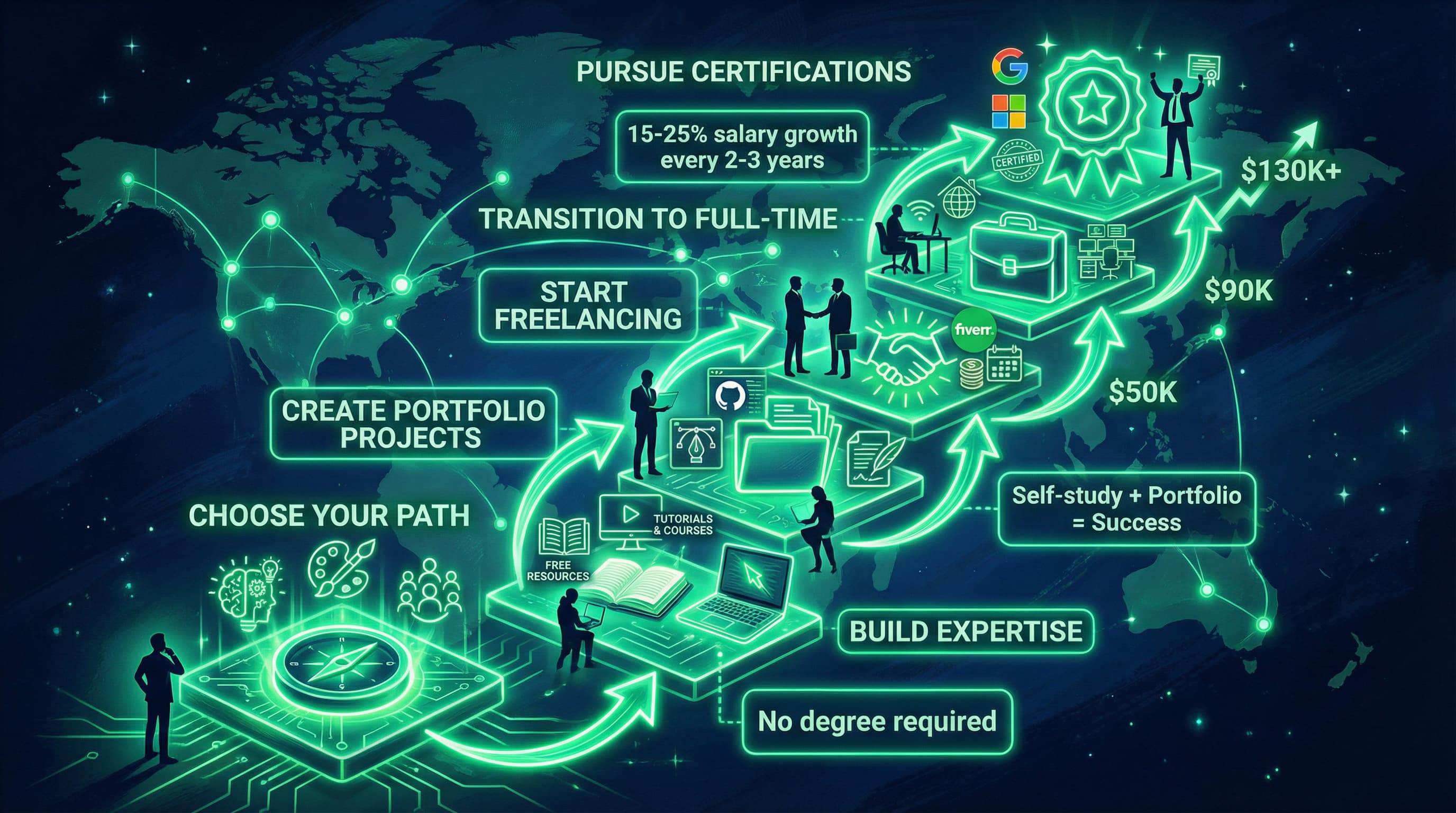
How to Launch a High-Paying Remote Career Without a Degree
1. Choose Your Path Based on Interests and Aptitude
Assess which roles align with your strengths. Technical roles (software engineering, data science) suit analytical, problem-solving minds. Creative roles (UX/UI, content, social media) attract creative professionals. Customer-facing roles (CSM, VA) suit interpersonal, organized individuals.
2. Build Demonstrable Expertise Through Self-Study
Leverage free and low-cost resources: YouTube channels, freeCodeCamp, Codecademy, Coursera (many courses audit-free), and official platform documentation. Combine self-study with bootcamps for structured learning and career support (typically $10,000–$15,000 and 12–16 weeks).
3. Create Portfolio Projects
Employers want proof of capability:
- Developers: GitHub repositories showing code quality, full projects
- Designers: Case studies with user research, wireframes, prototypes, outcomes
- Writers: Published articles, case studies, portfolio website
- Marketers/Social: Examples of campaigns, metrics, growth achieved
- Data specialists: Kaggle competitions, data analysis projects with insights
4. Start Freelancing to Build Reputation
Platforms like Upwork, Fiverr, Toptal, and Gun.io let you prove yourself without prior employment history. Start with modest rates and realistic project scope. Build reviews, testimonials, and case studies. Raise rates as reputation grows.
5. Transition to Full-Time Remote Employment
Use freelance portfolio and testimonials to secure full-time remote roles. Many companies prefer proven remote workers with real deliverables over traditional credentials.
6. Pursue Relevant Certifications (Optional)
While not required, certifications enhance credibility:
- Data/Analytics: Google Data Analytics Certificate, Microsoft Data Science
- SEO: Google Analytics/Search Console certifications, SEMrush Academy
- AI/Tech: Google AI Essentials, Microsoft Azure certifications
- UX: Nielsen Norman UX Certification, Google UX Design Certificate
- Project Management: Google Project Management Certificate
Key Factors Influencing Remote Salary Success
Experience Level: Entry-level positions start $15,000–$30,000 below mid-level equivalents. Expect salary growth of 15-25% every 2-3 years with demonstrated results.
Portfolio Quality: A strong portfolio often matters more than a degree. Invest time in 3-6 excellent, well-documented projects rather than numerous mediocre ones.
Specialization: Specialists earn 20-40% premiums over generalists. E.g., a React specialist commands more than a generic "web developer."
Track Record: Measurable results (revenue generated, traffic driven, churn reduced, users acquired) justify premium salaries. Lead with outcomes in applications and interviews.
Freelance vs. Full-Time: Freelancers often earn 20-40% higher hourly rates than employed equivalents but lack benefits and predictable income. Full-time roles offer stability, benefits, and often faster scaling.
Location Independence: Remote roles spanning multiple time zones command premiums. A developer servicing US clients from Southeast Asia often earns more than a local equivalent.
Continuous Learning: Tech evolves rapidly. Professionals investing in ongoing education (new frameworks, tools, methodologies) maintain salary growth. Those who stagnate face wage stagnation.
Remote Work Trends Shaping 2026 Salaries
AI Integration Premium: Professionals combining domain expertise with AI tool proficiency command 15-25% salary premiums. A content writer who masters ChatGPT and other AI tools scales output and quality.
Full-Stack Expectations: Employers increasingly seek professionals who handle multiple responsibilities. A web developer also managing DevOps or a marketer also analyzing data earns more.
Asynchronous Capability: Remote roles spanning time zones favor professionals effective in asynchronous communication. This skill commands premium pay.
Automation and AI Resilience: Roles incorporating AI knowledge and automation skills are recession-resistant. Data scientists and prompt engineers have exceptional job security.
Digital Nomad Demand: Companies actively recruit digital nomads for remote roles. This mobility opens geographic salary arbitrage—earning US/EU salaries while living in lower cost-of-living regions.
Common Mistakes to Avoid
Underpricing Early: Many remote workers drastically undercharge starting out. Research market rates and raise prices systematically. Underpricing attracts low-quality clients and depletes motivation.
Neglecting Portfolio Development: Jumping to job hunting without portfolio work limits opportunities. Invest 2-3 months building portfolio projects before aggressive job searching.
Ignoring Soft Skills: Technical ability alone doesn't guarantee success. Communication, reliability, time management, and client relationships are equally critical in remote work.
Staying in One Role Too Long: Without promotions or skill growth, salary growth plateaus. Every 2-3 years, reassess: Pursue advancement in your role, switch to higher-paying companies/roles, or increase specialization/expertise.
Overestimating Degree Importance: While focusing on degree, don't neglect portfolio and skill development. Practical ability always trumps credentials in remote work.
Conclusion
The remote work economy of 2026 rewards skill, portfolio quality, and demonstrated results over formal credentials. Each of these ten roles offers genuine pathways to six-figure income through self-study, strategic skill-building, and deliberate career progression.
The barrier to entry is lower than ever—free learning resources, affordable bootcamps, and accessible freelance platforms democratize opportunity. Success requires discipline, consistency, and willingness to continuously learn in rapidly evolving fields.
Whether you're transitioning careers, amplifying income, or embracing location independence, these high-paying remote roles represent genuine opportunity. Start with rigorous self-assessment of your interests and strengths, commit to building demonstrable expertise through projects and freelance work, and systematically progress toward premium remote compensation.
The future of work is remote, credential-agnostic, and merit-based. The question isn't whether these opportunities exist—it's whether you'll seize them.
Was this article helpful?
Table of Contents
The Remote Work Salary Landscape in 2026
1. AI Prompt Engineer
2. Data Scientist
3. Software Engineer / Developer
4. UX/UI Designer
5. SEO Specialist
6. Content Writer / Copywriter
7. Customer Success Manager
8. Social Media Manager
9. Virtual Assistant
10. Freelance Web Developer
How to Launch a High-Paying Remote Career Without a Degree
Key Factors Influencing Remote Salary Success
Remote Work Trends Shaping 2026 Salaries
Common Mistakes to Avoid
Conclusion
Share this article
Other articles

21 Best Remote Job Sites in 2026 (Verified Platforms)
Discover verified platforms from CareerBoom.AI to LinkedIn for landing high-paying remote careers.

Career Change at 30, 40 or 50: A Practical 2026 Roadmap
A comprehensive guide to pivoting your career mid-life, with strategies for self-assessment, transferable skills, and overcoming age bias.
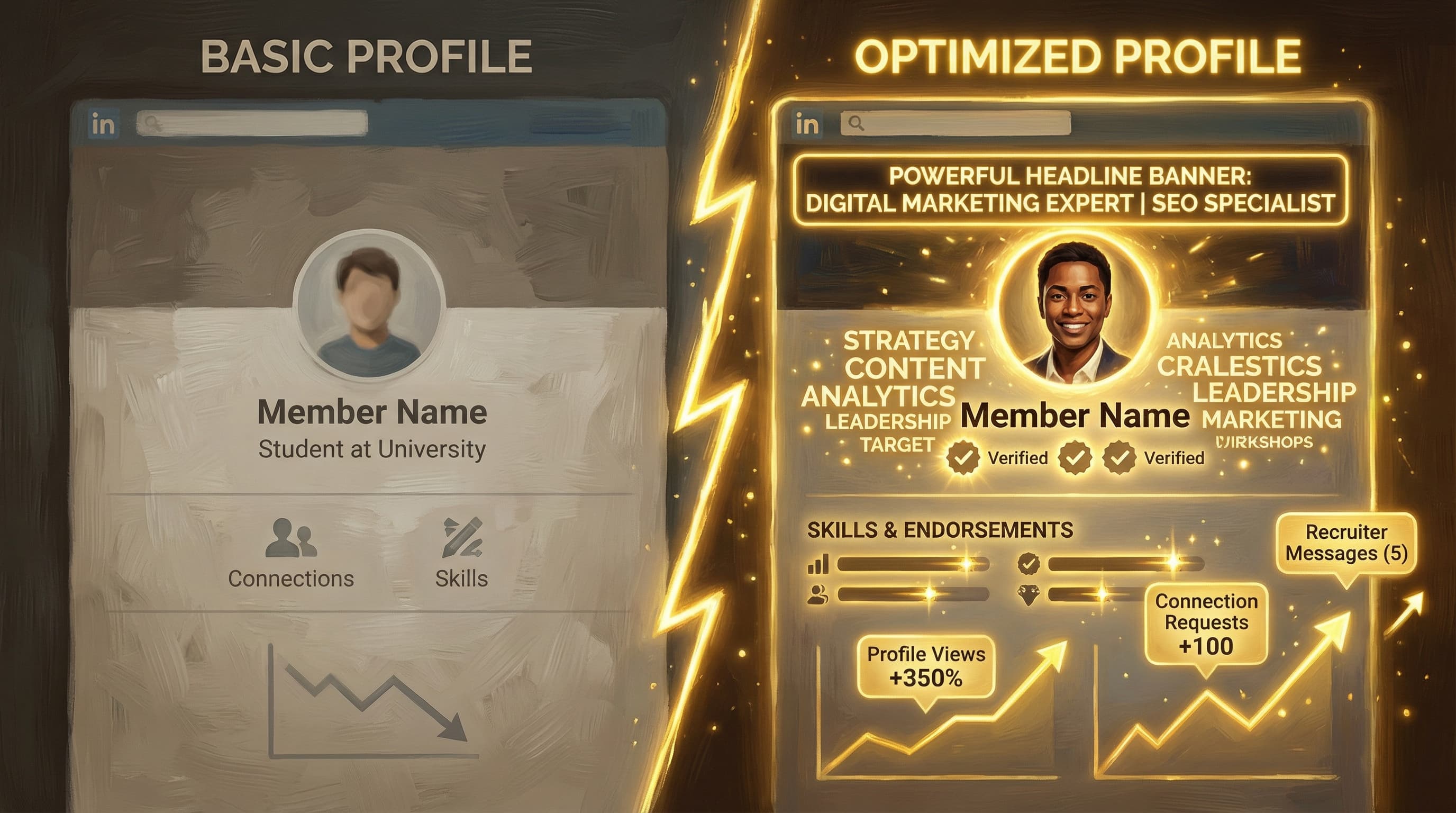
40 LinkedIn Tips and Tricks You Should Use in 2026
Master LinkedIn's algorithm, optimize your profile, and accelerate your career with these proven strategies