How to Write a Cover Letter That Actually Gets Read
Your guide to writing cover letters that get noticed by recruiters and beat the ATS.
8 months ago
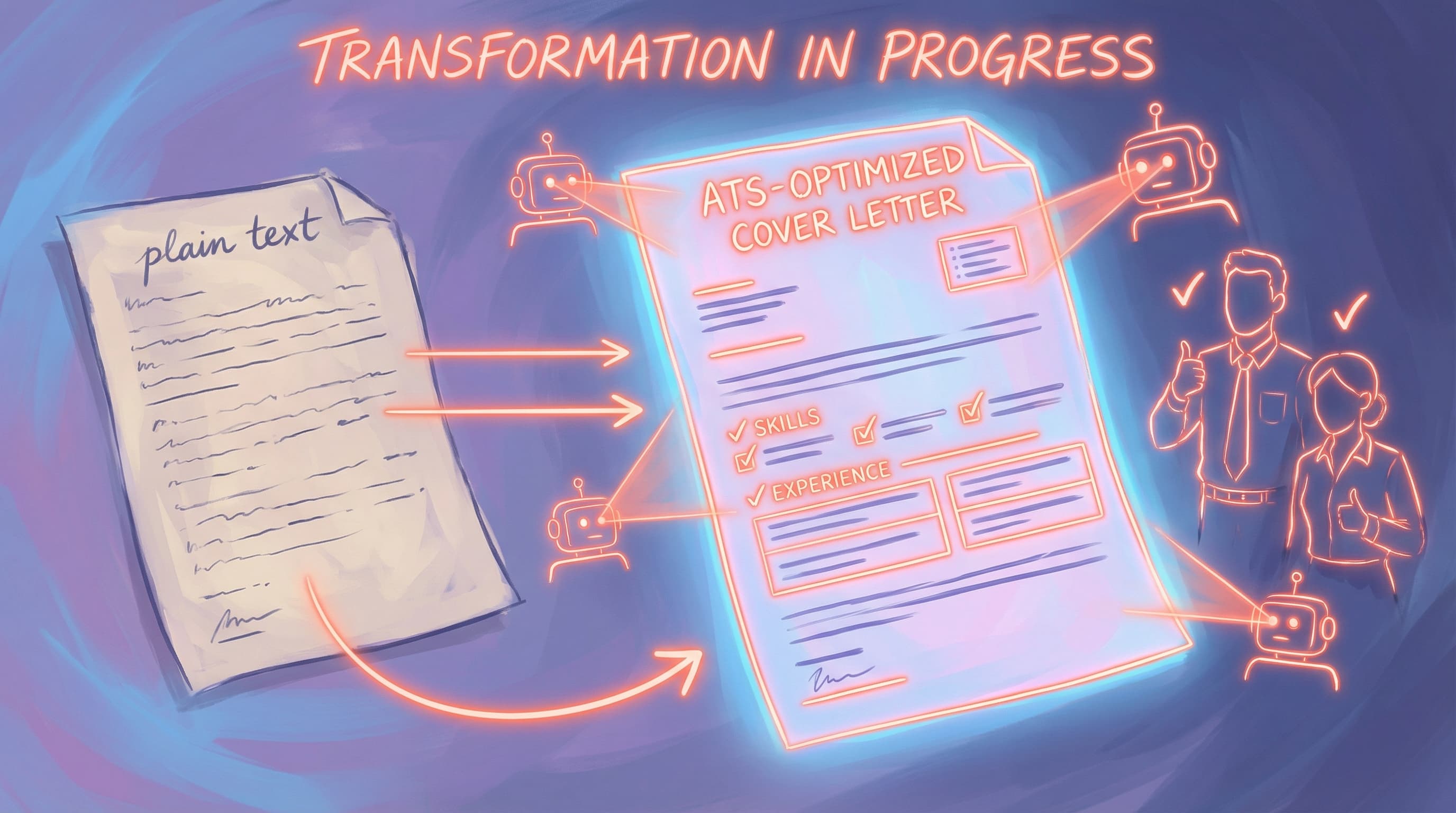
How to Write a Cover Letter That Actually Gets Read
Think of your cover letter as having three essential parts: a hook that grabs the reader’s attention right away, a body that connects your best work to what the company needs, and a confident closing that pushes for the next step—an interview. It's not about just repeating your resume. It's about telling a story that positions you as the exact solution they've been looking for.
Why Your Cover Letter Still Matters
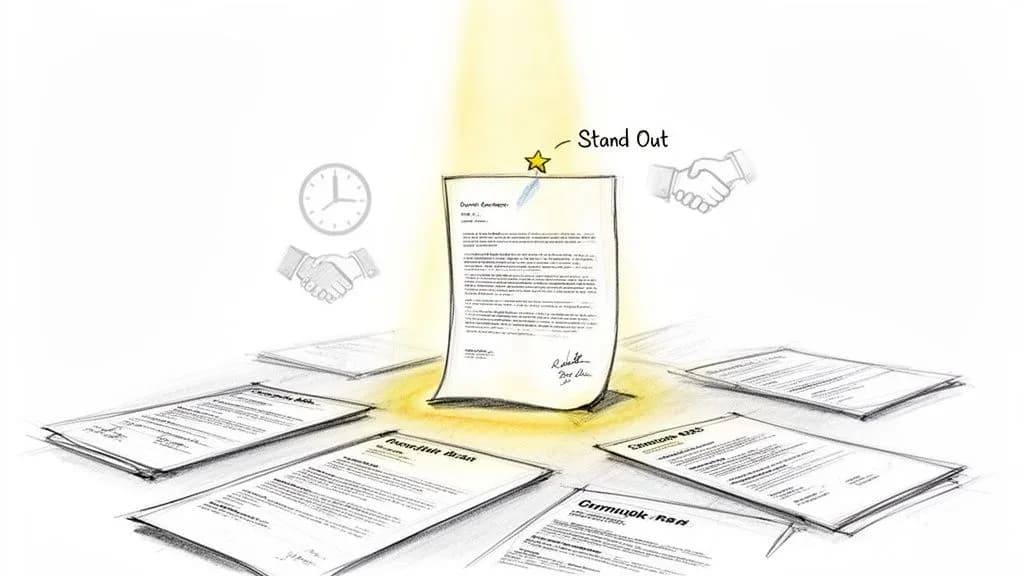
Let's be real for a second. You’ve probably wondered, "Does anyone even read these things anymore?" In a world of one-click applications and automated hiring funnels, it’s a totally fair question. The answer, surprisingly, is yes—but probably not how you think. A great cover letter isn't just a formality; it’s your secret weapon.
Your resume is the "what." It's a list of your skills, your past jobs, and your qualifications. But your cover letter? That’s the "why." It's your one chance to add some personality, give context to your career, and show genuine excitement for the role.
This is where you connect the dots for the hiring manager. You get to explain why that project you led at your last job makes you the perfect person to solve their specific problems. It’s what turns you from a flat list of bullet points into a real person who's done their homework and actually wants to be there.
Seizing the Opportunity Gap
Here's where it gets interesting. The data shows a huge opportunity for anyone willing to put in a little extra effort. While surveys show only 26% of recruiters consider cover letters a critical part of their decision, a whopping 47% of job applicants don't even submit one. This gap is your golden ticket. You can find more hiring statistics like this over at VisualCV.com.
What does this mean for you? It means that just by submitting a well-thought-out cover letter, you're already ahead of nearly half the competition. Its absence is noticed. Sending one shows you have initiative, an eye for detail, and a real interest in the company—all things every employer wants to see.
Your cover letter is the bridge between your past accomplishments and the company's future needs. It’s the single best place to craft a narrative that shows you’re not just qualified for the job, but you’re the solution they’ve been searching for.
Modernizing Your Approach
To make a real impact, you have to ditch the old, stuffy cover letter rules. The game has changed. Today's winning letters are concise, targeted, and easy for a busy recruiter to scan. They prioritize punch over formality and use simple, direct language to prove your value from the get-go.
Let's look at what's in and what's out for the modern cover letter.
The Modern Cover Letter: What's In vs. What's Out
| Outdated Approach | Modern Strategy |
|---|---|
| Generic opening: "To Whom It May Concern" or "Dear Hiring Manager." | Personalized hook: Directly addressing the hiring manager by name or referencing a specific company project. |
| Repeating your resume: Listing job duties and responsibilities verbatim. | Telling a story: Showcasing 1-2 key achievements with quantifiable results that align with the job description. |
| Focusing on your needs: Explaining why the job is good for your career. | Focusing on their problems: Detailing how you can solve their specific challenges and contribute to their goals. |
| Formal, stiff language: Using overly corporate jargon and clichés. | Authentic, confident tone: Writing in a natural, professional voice that reflects your personality. |
At the end of the day, a modern cover letter respects the reader's time. It gets straight to the point, makes a strong case for why you're the right person, and makes it incredibly easy for them to see your potential.
Decode the Job Description Before You Write a Word
Before you even think about drafting your cover letter, pause. The single most important step happens right now, and it doesn't involve writing a single word. It starts with a little bit of detective work.
Too many people jump straight into writing about themselves, but a truly great cover letter isn’t a monologue—it's a direct response to a company’s needs. Those needs are spelled out, often in plain sight, right in the job description.
Think of the job posting as your cheat sheet. It’s packed with clues about the company's culture, the exact technologies they use, and most importantly, the big problem they're trying to solve by hiring someone. Your job is to show them you are the solution. This is what separates a generic, easily discarded letter from one that makes a hiring manager sit up and take notice.
What Problem Are They Really Trying to Solve?
Every job opening exists for a reason. A company needs a project manager to stop projects from going over budget. They need a software developer to build a new feature customers are demanding. They need a marketing coordinator to get more leads in the door. Your first mission is to figure out that core challenge.
Scan the description for words that hint at pain points or big goals. Phrases like "streamline processes," "expand market share," or "build from the ground up" are gold. They tell you exactly what the company is focused on. Once you know their core need, you can shape your entire cover letter around how you’ve solved similar problems before.
A job description isn't just a shopping list of skills; it's a distress signal. It’s the company telling you exactly where they need help. Your cover letter is your chance to say, "I heard you, and I’m the help you’ve been looking for."
For example, if the post asks for a "self-starter" to "develop a new B2B content strategy," you can bet they currently lack a clear direction. Your letter shouldn’t just say you’re a self-starter; it should tell a short story about the time you built a successful content plan from scratch and what results it delivered.
Hunt for Keywords and Culture Clues
Next, put on your keyword detective hat. Many companies use Applicant Tracking Systems (ATS) to filter applications, and these systems are looking for specific words and phrases from the job description. To get past the bots, you need to speak their language.
Comb through the posting and pull out the most important skills, tools, and qualifications. Then, weave them naturally into your stories.
- Hard Skills & Tech: For a developer role, this might be Python, React, or Docker. Don't just list them. Talk about a project where you used React to build a dynamic user interface that boosted engagement.
- Soft Skills: Look for words like collaboration, leadership, or client-facing. Instead of claiming you're a good collaborator, describe a time you led a cross-functional team to a successful launch.
- Culture Cues: Pay close attention to the tone. Do they sound like a "fast-paced, innovative, and scrappy" startup? Or a more "methodical, data-driven, and process-oriented" corporation? Mirroring their language shows you get them and would fit right in.
Nailing this part has a huge impact. A letter that’s easy to scan and aligns with the job post's language gets noticed. Failing to connect the dots quickly can have real consequences—underemployed workers often earn 27% less than their peers in jobs that are a great fit, partly because their applications didn't make a strong enough case. You can get insights on optimizing your job search materials and see how this tailoring pays off.
By dissecting the job description first, you’re building a strong foundation. You’re not just writing a cover letter; you’re crafting a targeted pitch that proves you're the perfect person for the job.
Nail Your Cover Letter's Three-Act Structure

Forget the stuffy, formal templates you've seen before. The best way to think about your cover letter is as a short, punchy story—one with a clear beginning, middle, and end. A great letter hooks the reader, builds a rock-solid case for why you're the right person, and then confidently asks for the next step.
This isn't about just dropping your details into a pre-written script. It’s about building a narrative that makes a hiring manager stop scrolling and think, "I need to talk to this person."
We'll break this down into three simple parts: the hook, the body, and the closing. Each one has a specific job to do, and getting this flow right is the key to writing a cover letter that actually opens doors.
The Hook: Grab Their Attention in the First Sentence
You have one shot—maybe five seconds—to make an impression. Starting with "I am writing to express my interest in..." is the fastest way to get your application sent to the digital graveyard. Your opening needs to be direct, confident, and immediately relevant to their needs.
The strongest hooks show you've done your homework. They connect your excitement or a top skill directly to something specific about the company or the role. This instantly proves you're not just spamming out applications. For proven opening line strategies and 18 specific examples, explore our guide on cover letter opening lines that hook recruiters.
Here are a few ways to open with a bang:
- For a Developer: "When I saw your opening for a Senior Backend Engineer, I was immediately drawn to your work with scalable microservices. It's a challenge I recently tackled head-on while leading the refactoring of a monolithic app, which cut our API response times by 40%."
- For a Student: "As a final-year Computer Science student and a huge fan of your mobile app's intuitive UI, I was thrilled to see this internship opening. My recent project designing a user-centric task management app gave me hands-on experience with the exact design principles I admire in your product."
- For a Manager: "For the last five years, my focus has been helping SaaS companies streamline project workflows to cut costs and ship faster. Seeing your opening for a Project Manager focused on Agile transformation felt like a perfect match for my experience leading three teams to a 95% on-time project completion rate."
See the pattern? Each one is specific, confident, and drops a compelling result right away. It makes the reader lean in and want to know more.
The Body: Connect What You've Done to What They Need
This is the core of your letter, and the biggest mistake people make is just rehashing their resume. Don't do that. Your job here is to tell a quick story that shows how your accomplishments are the solution to their problems.
Keep it to one or two short paragraphs or even a couple of sharp bullet points. This is where you directly connect the dots between the job description’s must-haves and your real-world experience. Always focus on your impact and use numbers to make your wins feel real.
Key takeaway: Don't just list your skills—prove them. Instead of saying you have "strong leadership skills," talk about the time you united a struggling team to hit a tight deadline, saving the project from falling behind schedule.
Here’s a simple game plan for the body:
- Pinpoint 2-3 Core Needs: Go back to the job description. What are the top two or three things they're desperately looking for?
- Tell a "Mini-Story" for Each: For each need, briefly explain a time you used that skill to get a great result. Think in terms of the STAR method (Situation, Task, Action, Result).
- Quantify Everything: Numbers are your best friend. Did you boost sales, save time, increase sign-ups, or reduce errors? Use percentages, dollar amounts, and hard numbers.
Check out how a marketing manager could frame their body paragraphs:
"In my last role, my main objective was to ramp up lead generation for our B2B software. I saw that our content marketing was missing the mark with our ideal customers. I took charge and:
- Spearheaded a new content strategy based on customer interviews and deep competitor analysis, which drove a 60% increase in organic traffic in just one quarter.
- Built and launched a marketing automation workflow that boosted our lead-to-customer conversion rate by 15% in six months.
These initiatives directly added over $250,000 to the sales pipeline. I'm confident I can bring this same data-driven approach to your team to help you capture more market share."
This is so much more powerful because it shows your value instead of just talking about it.
The Closing: End with a Confident Call to Action
Your final paragraph is all about leaving a strong, positive impression and making the next step obvious. You want to sound enthusiastic and proactive, not passive. Ditch phrases like "I hope to hear from you." It’s time to take control.
Briefly restate your excitement for this specific role and company. Then, confidently propose a conversation to dig deeper into how you can help them win.
Here are a few solid ways to wrap it up:
- "I’m excited by the chance to bring my expertise in cloud infrastructure to your team. I’m available to chat next week about how my experience can help streamline your deployment processes."
- "My passion for creating accessible and engaging user experiences is a perfect match for your company's mission. I'd welcome the opportunity to discuss how my UX research skills could support your upcoming product launch."
- "Thank you for your time and consideration. My resume offers more detail on my background, and I’ve included a link to my portfolio below. I am eager to learn more about this opportunity and discuss my ideas for helping your team deliver projects more effectively."
Finally, use a professional sign-off like "Sincerely" or "Best regards," followed by your full name. This confident, action-oriented finish is what moves your application from the "maybe" pile to the "must-interview" list.
Write for Humans and Beat the Robots
Every cover letter you write is being judged by two very different readers. The first is the human—the hiring manager or recruiter you need to connect with. They're looking for personality, passion, and a glimpse of the real person behind the application.
But before they ever get that chance, your letter has to pass the robot—an Applicant Tracking System (ATS) programmed to scan for keywords and toss out anything that doesn't fit its rigid rules. To land an interview, you have to get past both.
This is the central challenge of modern job hunting. You need to craft a letter that’s technically sound enough to clear the digital gatekeeper, yet human enough to capture someone’s attention and make them think, "I need to talk to this person."
Understanding the ATS Challenge
Let's be real: your application probably won't be seen by human eyes first. Over 98% of Fortune 500 companies use an ATS to manage the flood of applications they receive. These systems act as a first-pass filter, scanning your documents for specific keywords and phrases pulled directly from the job description.
If your cover letter doesn't have the right language, it can get automatically rejected before anyone knows you exist. Think of it as a bouncer at a club—if you'm not on the list (i.e., you don't have the right keywords), you're not getting in.
So, how do you get past the bouncer without sounding like a robot yourself?
- Mirror the Job Description: Scour the job posting for key qualifications, skills, and technologies. If they're looking for "agile project management," don't just say you "led projects efficiently." Use their exact phrasing.
- Cover All Your Bases: The ATS might be searching for "SEO" or "Search Engine Optimization." To play it safe, it's a good idea to include both the acronym and the full phrase, especially the first time you mention it.
- Prioritize Hard Skills: While soft skills are crucial for the human reader, the ATS is all about tangible qualifications. Be sure to name the specific software, programming languages, or certifications they've asked for.
The goal isn't to awkwardly stuff your letter with buzzwords. It’s about weaving the company's own language into your story to signal that you are a perfect match for what they need.
The Art of Genuine Personalization
Once you’ve made it past the ATS, your cover letter lands in front of a real person. This is where the real magic happens. A generic, copy-pasted letter is painfully obvious and almost always ends up in the "no" pile. Real personalization goes way beyond changing the company name in the first sentence.
It's about proving you've done your homework and are genuinely excited about this company and this role. A quick 15-minute deep dive into their website, LinkedIn presence, or recent press releases can give you all the ammunition you need.
You're looking for specific details you can connect back to your own skills and passions.
Pro Tip: Do a little digging on LinkedIn to find the hiring manager's name. Starting your letter with "Dear Ms. Chen" hits so much harder than the cold, impersonal "To Whom It May Concern."
Here are a few ways to show you've put in the effort:
- Connect to a Company Value: "I was immediately drawn to [Company Name]'s commitment to sustainability. This resonates with me personally, as I've spent the last two years volunteering with local river cleanup initiatives."
- Mention a Recent Project: "As a UX designer, I've been following the launch of your new mobile app and was incredibly impressed with the intuitive checkout process. I have some ideas on how my experience with A/B testing could help optimize it even further."
- Align with Their Mission: "Your mission to make financial education accessible is something I'm deeply passionate about. In my previous role, I developed a series of workshops that taught budgeting basics to over 500 college students."
This kind of specific detail shows you’re not just spamming out applications. It shows you respect their work and genuinely want to be part of what they're building. In a sea of generic letters, that authentic interest is what makes you memorable.
Cover Letter Examples for Different Career Stages
Knowing the rules of writing a good cover letter is one thing, but seeing those rules in action is where it all clicks. The way a recent graduate presents themselves is naturally going to be miles apart from how a senior manager does, even if they're both following the same fundamental principles.
The real skill is in tailoring the story to your specific career stage to highlight what matters most right now.
Below, I’ll walk you through three different examples for common career crossroads. I’ve broken each one down to show you the thinking behind the hook, the body, and the closing. Don’t just copy these—think of them as strategic blueprints to build your own compelling story.
For the Student with Limited Experience
If you're a student or just graduated, it's easy to fall into the trap of thinking you have nothing to talk about. That's a huge myth. Your job is to frame your academic projects, internships, and even your most relevant coursework as legitimate professional experience. You need to radiate ambition and show you understand and connect with the company's mission.
Let's look at a computer science student gunning for a junior developer internship.
Example Breakdown:
-
The Hook: “As a final-year Computer Science student and a huge fan of your mobile app's intuitive UI, I was thrilled to see this internship opening. My recent project designing a user-centric task management app gave me hands-on experience with the exact design principles I admire in your product.”
- Why it works: This immediately signals genuine interest and cleverly connects a school project to the company’s real-world product. It shows they've done their homework and aren't just spamming applications.
-
The Body: “In developing my task management app, I was responsible for the entire front-end development using React and focused heavily on creating a seamless user experience. I implemented a state management system that reduced loading times by 30% compared to my initial build and conducted user feedback sessions that led to a 15% improvement in task completion rates.”
- Why it works: It treats a school project like a professional achievement by adding hard numbers. Metrics like 30% and 15% make the accomplishment feel tangible and far more impressive than just saying "I made an app."
-
The Closing: “My passion for creating clean, user-focused code is a perfect match for your company's mission. I'd welcome the opportunity to discuss how my skills in React and UX principles could support your development team.”
- Why it works: The closing is confident, not desperate. It ties everything back to the company’s values and proactively prompts the next step.
For the Mid-Career Developer
Once you're a few years into your career, simply listing your tech stack isn't enough. The game changes. Now, it’s all about demonstrating your impact, showing you take ownership, and proving you can solve actual business problems with code. Your cover letter should tell a mini-story about how you made a difference.
Here’s how a mid-level software developer might approach it.
Instead of just stating you know a programming language, your cover letter should tell a brief story about how you used that language to build something that made a difference—like cutting costs, increasing efficiency, or improving the customer experience.
Example Breakdown:
-
The Hook: “When I saw your opening for a Senior Backend Engineer, I was immediately drawn to your work with scalable microservices. It's a challenge I recently tackled head-on while leading the refactoring of a monolithic app, which cut our API response times by 40%.”
- Why it works: This is a fantastic opening. It leads with a massive, quantifiable win that's directly relevant to the role's primary challenge.
-
The Body: “At my previous company, I took ownership of the project to migrate our legacy payment processing system. By designing and implementing a new service-oriented architecture using Node.js and Docker, I not only improved system reliability but also reduced infrastructure costs by 20% annually. This project involved mentoring two junior developers and collaborating closely with the product team to ensure a smooth rollout.”
- Why it works: This paragraph is a powerhouse. It blends technical skills (Node.js, Docker) with clear business impact (20% cost savings) and essential soft skills (mentorship, collaboration) into one compelling narrative.
For the Senior Project Manager
At the senior level, the conversation shifts from doing the work to leading the work. Your cover letter needs to instantly communicate leadership, strategic vision, and bottom-line results. It’s less about your personal project contributions and more about how you empower your team to deliver.
Example Breakdown:
-
The Hook: “For the last five years, my focus has been helping SaaS companies streamline project workflows to cut costs and ship faster. Seeing your opening for a Project Manager focused on Agile transformation felt like a perfect match for my experience leading three teams to a 95% on-time project completion rate.”
- Why it works: It frames the applicant as a high-level problem-solver from the get-go and opens with an incredibly strong, top-line metric.
-
The Body: “In my most recent role, I inherited a portfolio of projects that were consistently running over budget by an average of 18%. I introduced a hybrid Agile framework, established clearer communication channels, and implemented a risk management protocol that brought 100% of projects back within budget inside of two quarters. This initiative ultimately saved the company over $400,000.”
- Why it works: This is all about impact. It clearly states the problem, describes the solution, and presents a massive, undeniable result in cold, hard cash. This is the kind of language that gets a hiring manager's attention.
Your Cover Letter Questions Answered

Even after you've poured your heart into writing a great cover letter, a few nagging questions can pop up right before you hit "send." Let's tackle the four most common ones I hear from job seekers. Getting these details right is the final polish that makes all your hard work shine.
Think of it this way: a fantastic letter can still be undermined by a simple logistical mistake. Let’s make sure that doesn't happen.
How Long Should a Cover Letter Be?
Keep it concise. Hiring managers are drowning in applications, so your goal is to make a powerful impression, not to write a novel. The sweet spot is 250 to 350 words. This is long enough to tell a compelling story but short enough to fit comfortably on one page.
This word count is a blessing in disguise. It forces you to be ruthless with your editing, highlighting only your most relevant achievements. A letter that rambles on for two pages is far more likely to be skimmed—or worse, ignored completely.
What If a Cover Letter Is Optional?
This isn't really a question; it's a test. When an application marks the cover letter as "optional," it's your golden opportunity to get ahead. A surprising number of applicants will take the path of least resistance and skip it.
By submitting one, you immediately signal that you’re serious and willing to do more than the bare minimum. That’s a trait every single employer is looking for. It’s your chance to start a conversation while everyone else is just handing in a form.
An "optional" cover letter is your chance to have a conversation when everyone else is just handing in a form. It's the single best way to show you're serious about the opportunity.
Can I Reuse the Same Cover Letter?
Let me be blunt: absolutely not. Firing off the same generic letter for every application is one of the fastest routes to the rejection pile. Recruiters have seen thousands of cover letters, and they can spot a lazy, copy-pasted template from a mile away.
Every letter you send needs to be a unique document, tailored specifically for that role and that company. Weave in keywords from the job description. Show you've done your homework on their mission. That customization is what makes a letter feel genuine and convincing.
What Is the Best Format to Use?
Your formatting should be clean, professional, and invisible. The focus should be on your words, not on a distracting or overly-creative layout. A classic business letter format is always a safe bet.
Stick to these simple rules:
- Font: Use a professional, easy-to-read font like Calibri, Arial, or Georgia in an 11 or 12-point size.
- Header: Make sure the header with your name and contact info matches the one on your resume for a cohesive look.
- Spacing: Keep it clean with single spacing inside paragraphs and a double space between them. It makes the whole document much easier to read.
A polished, professional presentation shows you care about the details.
Feeling stuck trying to craft the perfect, tailored letter every time? The CareerBoom.ai Cover Letter Generator can help you create customized, professional letters in minutes, so you can focus on acing the interview. Create your winning cover letter now.
Before you send your cover letter, ensure your resume is equally polished by reviewing common mistakes in our article on bad resume examples and what not to do.
Was this article helpful?
Table of Contents
Share this article
Other articles
Cover Letter Opening Lines That Hook Recruiters (18 Proven Examples)
Ditch the boring intro. These attention-grabbing first sentences will make hiring managers actually want to read your cover letter.
Do You Really Need a Cover Letter? (+ When to Skip It in 2026)
The definitive answer to whether cover letters still matter—plus the exact scenarios when you can skip them without hurting your chances.
How Long Should A Cover Letter Be in 2026? (The Definitive Guide)
Stop writing essays. Discover the perfect word count for email and attached cover letters to get more interviews.